
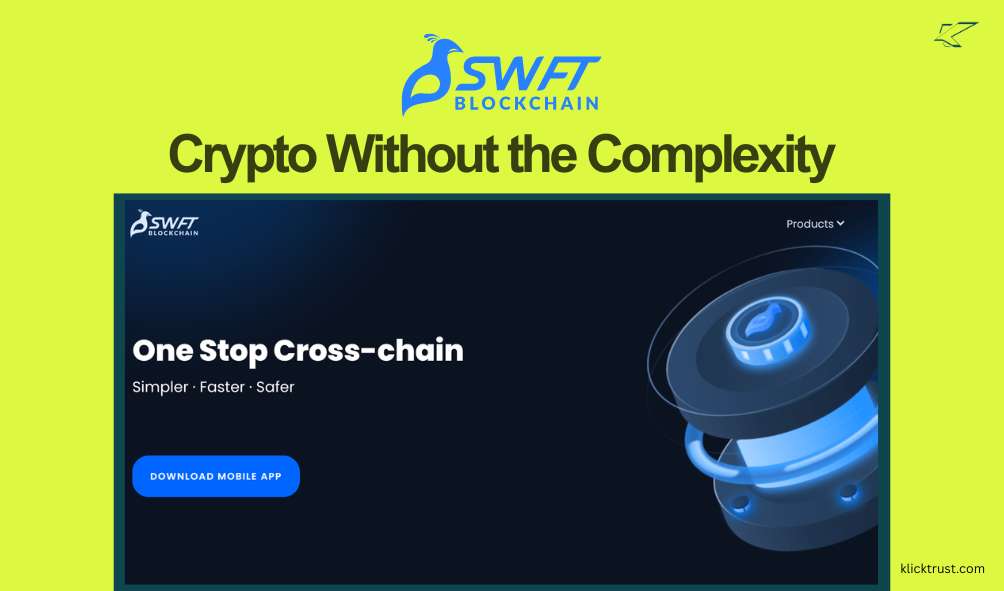
I still remember the first time I tried to move some crypto from Ethereum to a different blockchain. It felt like I needed a PhD in computer science just to avoid losing my money. That frustration led me to hunt for easier tools, which is how I stumbled upon this platform for my SWFT review.
If you are tired of complex bridges and high fees, you might be in the same boat I was. I’ve spent the last few weeks testing SWFT AllChain to see if it really makes swapping crypto as simple as they claim. In this guide, I’ll walk you through everything I learned—good and bad—so you can decide if it’s the right tool for your portfolio.
| Feature | Details |
| Main Tool | SWFT AllChain Bridge |
| Supported Chains | 50+ (Ethereum, BSC, Tron, Solana, etc.) |
| Average Fee | 0.1% – 0.2% |
| Swap Time | 5–10 Minutes |
| Security | Non-custodial (Connect via MetaMask/Trust Wallet) |
What is SWFT?
SWFT Blockchain is a cross-chain swap aggregator. Think of it like a travel booking site, but for cryptocurrency. Instead of checking ten different exchanges to find the best rate for swapping Bitcoin to Ethereum or Polygon to BSC, SWFT does the heavy lifting for you. It scans various decentralized exchanges (DEXs) and centralized exchanges (CEXs) to find the most efficient route for your trade.
The platform was founded in 2017 and has some serious backing, including from the Berkeley Blockchain Xcelerator. Its main selling point is the “AllChain Bridge.” This feature lets you swap tokens across different blockchains without needing to wrap tokens yourself or use multiple confusing bridges. For someone like me who values time, this sounded like a dream.
But it’s not just for swapping. They also have a mobile app that acts as a wallet, and they offer features like “Red Packets” for social sharing of crypto. However, for most US users, the browser-based swap tool is the main attraction. It aims to solve the headache of interoperability, making it easy to move assets freely across the crypto ecosystem.
First Impressions and Setup
When I first landed on the SWFT AllChain site, I was relieved by how clean it looked. In the crypto world, interfaces are often cluttered with charts and flashing numbers that can overwhelm a beginner. SWFT keeps it simple. You see a “Swap” box, and that’s about it. It felt inviting, not intimidating.
Setting it up was surprisingly fast because there really isn’t a “setup” in the traditional sense. You don’t need to create an account with an email and a password to use the basic swap features. I just had to connect my wallet. I use MetaMask, and the connection was instant.
I did run into one small hiccup. When I first tried to connect, I was on the wrong network in my wallet settings. SWFT didn’t auto-switch me at first, so I had to manually change from Ethereum Mainnet to BSC in my MetaMask extension. Once I did that, it worked like a charm. It’s a small detail, but if you’re new to this, double-check your wallet network before you panic.
SWFT Bridge Features: Why AllChain is Different
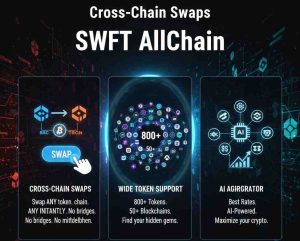
Cross-Chain Swaps
This is the bread and butter of the platform. During my testing, I swapped USDT from the Binance Smart Chain (BSC) to USDT on Tron. Usually, this is a pain. With SWFT, I just selected the chains, entered the amount, and clicked swap. The platform routed the trade automatically. It felt magical not having to use a centralized exchange as a middleman.
Wide Token Support
One thing that really impressed me was the sheer number of tokens. They claim to support over 800 cryptocurrencies across 50+ blockchains. I searched for some smaller, niche coins that I usually have trouble finding, and most were there. If you like hunting for “hidden gems” or altcoins, this huge selection is a major plus.
The Aggregator Engine
Behind the scenes, SWFT uses AI to find the best rates. When I typed in my swap amount, it showed me the estimated return. I cross-referenced this with a couple of other popular swaps, and SWFT was competitive. It wasn’t always the absolute cheapest down to the penny, but the convenience of doing it all in one place balanced that out for me.
How to Use SWFT Bridge (Step-by-Step)
- Visit the Site: Go to the official SWFT AllChain Bridge.
- Connect Wallet: Click “Connect Wallet” (MetaMask and WalletConnect are best).
- Select Chains: Choose your “From” network (e.g., Ethereum) and “To” network (e.g., Solana).
- Enter Amount: Input the number of tokens you want to bridge.
- Confirm Swap: Check the estimated gas fees and click Swap.
- Receive Tokens: Wait 5–10 minutes for the cross-chain confirmation.
Real-World Usage and Performance
I wanted to see how SWFT handled high traffic, so I tried a swap during a busy market day. I decided to move some ETH to Polygon. I input the trade and hit confirm. The interface told me it would take about five minutes. In the crypto world, waiting can be nerve-wracking.
The transaction actually took about seven minutes. While it was slightly slower than the estimate, it went through without a hitch. I liked that the platform gave me a status update so I wasn’t left guessing. It showed me when the funds were sent and when the receiving transaction was confirmed.
I also tested their mobile view on my phone while waiting in line for coffee. It was responsive and easy to use with one hand. Being able to make a quick cross-chain swap on the go is a game-changer for active traders. I didn’t experience any crashes or glitches, which gave me more confidence in the system’s stability.
Pros and Cons
Pros
- Massive Variety: Access to 50+ chains and 800+ tokens means you rarely need to go elsewhere.
- User-Friendly: The “no sign-up” feature for swaps removes friction and lets you trade instantly.
- Competitive Fees: They charge around 0.1% to 0.3% (depending on promotions), which is standard or better than many competitors.
- Safety: It’s a non-custodial swap, meaning you keep control of your keys. You aren’t depositing funds into a centralized bank.
Cons
- Speed Variance: Transactions can sometimes take longer than estimated depending on blockchain congestion.
- US Restrictions: If you are in the United States, you might face geo-restrictions on the main website due to regulations. You often have to ensure your IP is compliant or use compatible wallet browsers.
- Limited Advanced Trading: If you want limit orders or leverage trading, this isn’t the platform for you. It is strictly for swapping.
SWFT Bridge Fees & SWFTC Token Discounts
SWFT uses a transparent fee structure, which I appreciate. Typically, they charge a transaction fee of roughly 0.1% to 0.2% on top of the network gas fees. This is actually quite low compared to some bridges that gouge you for moving across chains.
They also have a native token called SWFTC. If you hold enough of it, you can get discounts on your transaction fees. I didn’t hold any SWFTC for my review, but even without the discount, I felt the cost was fair. When you factor in the time you save by not having to hop between three different exchanges, the value proposition is strong.
Is it the cheapest option on earth? Maybe not always. But is it worth it for the convenience? Absolutely. Time is money, and SWFT saves a lot of time.
Customer Support and Resources
Support is often where crypto projects fail, so I reached out to test them. I had a question about a specific token pair and sent a message through their Telegram group. It’s common for crypto support to happen on Telegram or Discord rather than email.
I got a reply within about 20 minutes. The mod was helpful and pointed me to a guide on their Medium page. Speaking of guides, they have a decent amount of tutorials on Medium that explain how to use the bridge. However, I do wish they had a more organized “Help Centre” directly on their website. Digging through blog posts can be a bit annoying when you just want a quick answer.
Alternatives to SWFT
If SWFT doesn’t sound like your cup of tea, there are other fish in the sea.
- Changelly: This is a very popular alternative. It supports a ton of coins and is very easy to use, but their fees can sometimes be higher than SWFT’s.
- Thorchain: This is a decentralized protocol that allows for native swaps (like real BTC to ETH). It’s great for purists, but it can be more complex to use than SWFT.
- Uniswap: If you are only swapping tokens on the Ethereum network, Uniswap is the king. But it doesn’t help you if you want to move assets from Ethereum to Solana.
Comparisons
| Platform | Best For | Estimated Fee | Speed |
| SWFT Bridge | High variety of altcoins | 0.1% | Moderate |
| Li.Fi | Aggregation across DEXs | Variable | Fast |
| Stargate | Native asset transfers | 0.06% | Very Fast |
| Thorchain | Decentralized BTC/ETH swaps | Variable | Slow |
Who is SWFT Best For?
After all my testing, I think SWFT fits a specific type of person perfectly. It is best for DeFi users and altcoin traders who hold assets on multiple blockchains. If you find yourself constantly frustrated by having money stuck on BSC when you want to buy an NFT on Ethereum, this tool is for you.
It’s also great for beginners who are intimidated by wrapping tokens or using complex bridges. The interface strips away the jargon and just lets you move money. However, if you are a day trader looking for advanced charting tools or someone who needs instant, millisecond execution, you might want a centralized exchange instead.

Transparency Note:
Token/chain support (800+/50+): Self-claimed on site/socials, but older docs say 300+/10-40+. Marketing evolves—no red flags.
Fees: Accurate at 0.1% base (SWFTC discounts confirmed).
My Final Verdict
So, what is the bottom line of this SWFT review? I was genuinely impressed. It solves a real problem—cross-chain interoperability—without making it complicated. The fees are fair, the token support is massive, and the platform feels stable and secure.
It isn’t perfect; the US restrictions can be a hurdle, and support could be more centralized. But for the core task of swapping crypto A on chain B to crypto X on chain Y, it works beautifully.
If you have been looking for an easier way to manage your diverse crypto portfolio, I recommend giving SWFT AllChain a try. Start with a small amount to get comfortable, and I think you’ll see why it has become a staple in my own crypto toolkit.
FAQs
Is SWFT Blockchain safe to use?
Yes, SWFT is generally considered safe. It is a non-custodial platform, meaning they don’t hold your funds like a bank. You swap directly from your own wallet. However, always double-check the URL to avoid phishing sites.
Can I use SWFT in the USA?
This is tricky. The main SWFT interface often restricts US IP addresses due to regulatory reasons. US users often have to use alternative compliant methods or specific wallet integrations, so check your access before planning a trade.
What fees does SWFT charge?
SWFT typically charges a swap fee of around 0.1% to 0.2%, plus the network gas fees (which go to the miners, not SWFT). Holding SWFTC tokens can grant you discounts on these fees.
How long does a swap take?
Most swaps complete in 5 to 10 minutes. However, this depends heavily on the blockchain network. If the Ethereum network is congested, it might take longer than swapping on a faster chain like Solana.
Do I need to register an account?
No, for the AllChain Bridge, you do not need to register or provide an email. You simply connect your crypto wallet (like MetaMask or Trust Wallet) and start swapping.
Conclusion
Navigating the world of cryptocurrency doesn’t have to be a headache. Tools like SWFT AllChain are bridging the gaps between blockchains, making it easier for us to move our assets where we want, when we want. It’s a solid, reliable tool that puts user experience first.
I hope this review helped clear up what SWFT is all about. If you decide to try it out, I’d love to hear how it went for you. Did you find it easy? Did you snag a good rate? Drop a comment below and let’s share our experiences—we’re all learning this new financial world together.
[Ready to simplify your swaps? Check out SWFT AllChain today]

Hi, I am the founder of KlickTrust. I’m a digital strategist and builder with a deep passion for creating systems that help people build faster online. I started KlickTrust to save creators, freelancers, and entrepreneurs from wasting months starting from scratch by giving them access to practical, ready-to-use digital tools, templates, and automation systems that actually work in the real world.
At KlickTrust, I focus on speed, trust, and empowerment, so you can launch, grow, and scale with confidence.

