

I still remember staring at a blank screen, stuck with no product, no funnel, and no tech skills—classic beginner panic. That’s why PLR funnels for funnel building felt like a breath of fresh air to me; they turn chaos into clarity by giving you a ready-made path instead of a maze. Over time, testing everything from private label rights funnel templates to a ClickFunnels PLR funnels package, I learned what actually works and what’s just hype. In this guide, I’ll show you how pre-built PLR funnels for beginners can feel like an online business in a box, with a sales page, upsell, and email sequence included. If you want a simpler way to start without overthinking, stick with me—I’ll walk you through it like a friend who’s already made the mistakes.
What Are PLR Funnels? (Simple Explanation for Beginners)
Let me put this in plain language, the way I wish someone had explained it to me early on. PLR funnels are ready-made sales funnels that come with Private Label Rights, which means you’re legally allowed to edit them, brand them, and use them as your own. Think of it like buying a fully cooked meal that you can season, rename, and serve under your own brand instead of cooking from scratch. For beginners, this removes the fear of “doing it wrong” before you even start.
Private Label Rights simply mean ownership of usage, not authorship. You didn’t create the original funnel, but you have the rights to use it, customize it, and even sell products through it. This is very different from normal PLR products, which are usually just ebooks or courses. PLR funnels for digital products include the entire selling system, not just the content.
Here’s the key difference most people miss: a PLR product is a single piece, but a PLR funnel is the full journey. With PLR funnels for funnel building, everything is already connected, tested, and designed to guide visitors step by step. Instead of guessing what comes next, the system thinks for you. That’s why many beginners stick with it instead of quitting halfway.
What’s Included in a Done-For-You PLR Sales Funnel
A true done-for-you PLR sales funnel feels like an online business in a box. From my experience, the best ones include:
- Sales page that explains the offer clearly
- Order page to collect payments smoothly
- Upsell / downsell pages to increase value per customer
- An email sequence is included to follow up automatically
- Lead magnet or front-end offer to attract first-time visitors
When all of this is bundled together, it becomes a plug-and-play sales funnel system. You’re not stitching random tools together or guessing what to build next. You start with something real, tweak it to fit your voice, and move forward with confidence instead of doubt.
How PLR Funnels Help With Funnel Building (Real Use Case)
When I first tried to build a funnel from scratch, it felt like building a house with no blueprint. Copy alone took days, design took longer, and testing never really ended. This is why funnel building usually stretches into weeks and burns out beginners before they ever launch. Most people don’t quit because they lack motivation—they quit because the process feels endless.
That changed for me when I used ready-made marketing funnels for the first time. Instead of guessing what to write or where buttons should go, everything was already laid out. The sales page, flow, and logic were done, so I could focus on small tweaks instead of big decisions. That shortcut alone saved me weeks of trial and error.
My real “aha” moment came with a plug-and-play sales funnel system. I connected the pages, adjusted the message, and hit publish without stress. It felt strange at first, like I was skipping steps, but the results made sense. The funnel worked because the structure was already proven.
That’s why PLR funnels for funnel building feel like an online business in a box. You’re not starting from zero or guessing your way forward. You’re stepping into a system that already knows where the customer should go next. For beginners, that clarity is often the difference between launching and giving up.

ClickFunnels PLR Funnels Package: How It Actually Works
Most PLR funnels are built for ClickFunnels for one simple reason: it removes friction. When I first used a ClickFunnels PLR funnels package, I didn’t feel lost or overwhelmed. The drag-and-drop sales funnel builder made everything visual, like moving sticky notes on a wall instead of writing code. That ease matters when you’re a beginner and confidence is fragile.
ClickFunnels compatibility also means the funnel logic is already wired correctly. Pages talk to each other. Payments flow. Emails fire on time. With done-for-you PLR sales funnels, you’re not wondering why a button is broken at 2 a.m. You’re working inside a system that thousands of online business owners already use every day.
The biggest relief for me was this: no coding, no design stress, no tech panic. You open the funnel, swap the text, adjust colors, and hit save. That’s it. For anyone serious about how to start an online business with PLR funnels, this setup feels like training wheels that don’t slow you down—they help you ride forward with balance.
ClickFunnels PLR Funnels Review 2026 (High-Level Overview)
What beginners like:
Most beginners I talk to love how simple this feels on day one. A ClickFunnels PLR funnels package opens like a map, not a mystery, thanks to the drag-and-drop sales funnel builder. You can see the whole flow at once, which calms the nerves fast. For many, that clarity alone keeps them from quitting early.
Where expectations need to be realistic:
This is not magic, and it never was. Done-for-you PLR sales funnels save time, but they don’t replace thinking or effort. You still need to tweak the message, know your audience, and send traffic. Think of it like a GPS—it shows the road, but you still have to drive.
Who gets results (and who doesn’t):
The people who win are the ones who treat PLR funnels for funnel building as a starting point, not a shortcut to instant money. They customize, test, and learn as they go. Those who expect passive income without action usually stall out. In real life, the system works best for builders, not dreamers.
Who Should Use PLR Funnels (And Who Shouldn’t)
Let me be honest—PLR funnels are not for everyone, and that’s a good thing. I’ve seen people win with them, and I’ve also seen people quit fast because their expectations were off. When used by the right person, PLR funnels for funnel building can remove fear and speed up action. When used by the wrong person, they feel frustrating and “don’t work.”
Best Fit For
If you’re a beginner with a “no product, no problem” mindset, PLR funnels can feel like a safety net. That was me at the start. I didn’t know what to sell, but a ready-to-launch PLR funnel system gave me something real to work with instead of endless ideas in my head.
PLR funnels for affiliate marketing also make sense if you hate building from scratch. You get done-for-you lead generation funnels that already follow a proven flow. Instead of fighting the structure, you focus on traffic and messaging, which is where real growth happens.
Online business owners testing new offers often use PLR funnels as a fast test lab. I’ve seen people validate ideas in days instead of months by tweaking a sales page and watching how users respond. For coaches and creators, this becomes a shortcut to fast lead generation without burning energy on tech.
Not Ideal If
If you expect instant passive income, this will disappoint you. PLR funnels are tools, not vending machines. You still need to show up, test ideas, and send traffic, or nothing moves.
If you don’t want to customize anything, this probably isn’t your lane. High-converting PLR funnels still need your voice, your audience, and your intent layered on top. Think of it like renting a house—you can’t complain if you never unpack.
And if you hate marketing or traffic generation, be careful. Even the best beginner-friendly funnel building solution needs visitors to work. No traffic means no data, and no data means no growth.

How to Start an Online Business with PLR Funnels (Step-by-Step)
Starting with PLR funnels feels a bit like borrowing a proven recipe instead of guessing ingredients. I’ve learned that speed matters early on, and this step-by-step flow keeps things simple and sane. Think of it as setting up a small shop before you worry about decorating the window.
Step 1: Choose the Right PLR Funnel System
This step decides everything that follows, so slow down just a little here. Pick a niche that people already spend money in, not one you hope will work. Look for clear funnel structure and resell rights digital products, so you’re not boxed in later. A ready to launch PLR funnel system should feel clear at first glance, not confusing.
Step 2: Customize the Funnel (Minimum Required)
Here’s where beginners overthink, and I used to do the same. You don’t need perfection—just basic branding tweaks, clear offer positioning, and simple trust elements for a US audience, like testimonials or guarantees. When I stopped rewriting everything and focused on clarity, conversions improved. High-converting PLR funnels usually win because they’re clear, not clever.
Step 3: Launch and Drive Traffic
This is the part many people avoid, but traffic is the real fuel. Organic traffic builds trust over time, while paid traffic buys speed, and both work when used right. I learned fast that traffic matters more than the funnel itself, because even the best system fails in silence. Once visitors arrive, the funnel finally gets a chance to do its job.
If you treat this process like learning to ride a bike—steady, imperfect, and moving forward—you’ll build momentum fast. That’s how PLR funnels turn from theory into a real online business.
PLR Funnels for Affiliate Marketing vs Digital Products
This is where many beginners get stuck, so let me simplify it the way I learned through trial and error. PLR funnels for funnel building work for both affiliate marketing and digital products, but the advantage shows up in different ways. I’ve used both paths, and each one solves a different problem depending on where you are in your journey.
For affiliate marketing, PLR funnels shine as done-for-you lead generation funnels. You don’t need to own a product or handle support. The funnel warms people up, builds trust, and then sends them to an affiliate offer. When I started, this felt like borrowing a bridge instead of trying to build one over a river. It’s faster, lighter, and perfect when confidence is still growing.
For digital products, PLR funnels become high-converting PLR funnels that act like a silent salesperson. Everything is already mapped out—the sales page, upsell flow, and email follow-up—so your product isn’t left guessing. I’ve seen even simple offers perform better because the structure did the heavy lifting. It’s less about creativity and more about clarity.
For beginners, this is where PLR funnels really earn their place. A beginner-friendly funnel-building solution removes decision fatigue and fear. Instead of asking, “What do I build next?” you just follow the path. That clarity is often the difference between launching something real and quitting before day one.
Quick comparison for clarity:
- Affiliate marketing: Done-for-you lead generation funnels that focus on trust and traffic
- Digital products: High-converting PLR funnels that sell with structure, not stress
- Beginners: A beginner-friendly funnel-building solution that replaces confusion with action
If I had to sum it up, affiliate funnels help you start moving, and digital product funnels help you build momentum. Both work, but the right choice depends on whether you want speed, control, or a mix of both.
Common Myths About PLR Funnels (Debunked)
If you’ve spent any time online, you’ve probably heard whispers like, “PLR funnels don’t work anymore,” or “Everyone uses the same funnels, so it’s pointless.” And my personal favorite: “You don’t need skills at all, just copy and paste, and money magically appears.” Trust me, I’ve been there—sceptical, frustrated, and ready to give up before even trying.
Here’s the truth. Yes, some PLR funnels are widely available, but that doesn’t mean they’re useless. Think of it like buying a cookbook that thousands of people own. Sure, others have it, but your flavor, tweaks, and presentation make it unique. In the same way, PLR funnels for funnel building give you a framework—the high-converting structure is already there—but how you customize, brand, and drive traffic determines real results.
The myth that PLR funnels are dead comes from expecting instant success without effort. I’ve tried funnels that were “ready-made” and done nothing with traffic or messaging—and yes, they failed. But the funnels I treated as a tool, testing pages, tweaking emails, and optimizing offers, consistently performed. The key is combining the funnel’s structure with your insight and audience understanding.
And about that “no skills needed” claim—let me be honest. You don’t need to be a tech wizard, but you do need curiosity, attention, and willingness to experiment. I once spent hours adjusting a ClickFunnels PLR funnels package, learning which headlines convert and which emails actually get clicks. Those small tweaks made the difference between a flat launch and a profitable mini-business.
In short, PLR funnels aren’t magic, and they aren’t a shortcut to skipping the work. They’re a springboard, a guided path that removes beginner guesswork and fear—but you still need to step on it, drive traffic, and apply your insights. Once you do, myths fade fast, and the results speak for themselves.
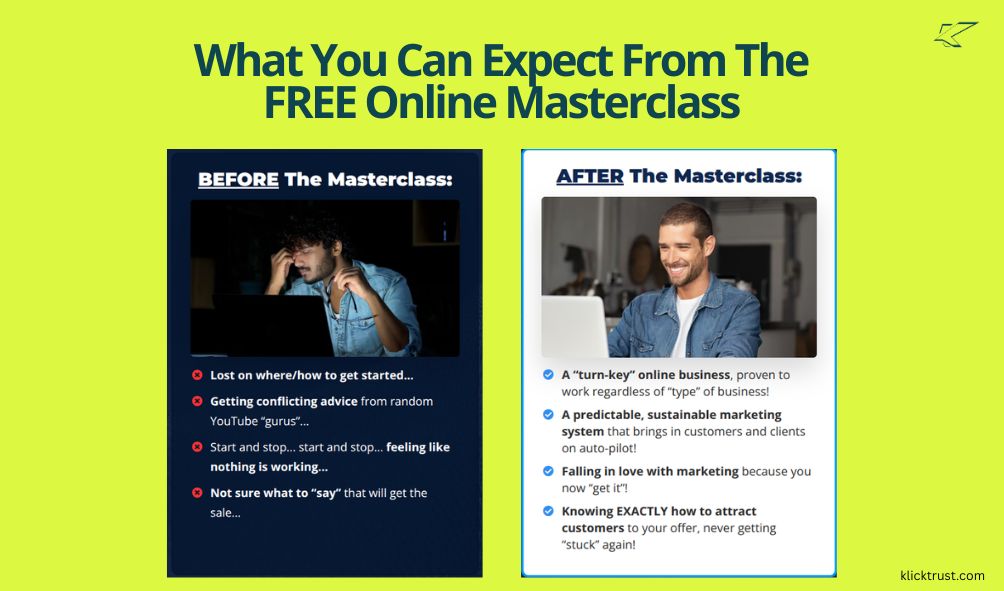
Click Here To Join Free Masterclass
Pros and Cons of Using PLR Funnels for Funnel Building
If I’m being honest, PLR funnels for funnel building are a bit like having a bicycle with training wheels. They don’t replace the ride—you still need to pedal—but they stop you from falling flat on your face. Over the years, I’ve used everything from private label rights funnel templates to ClickFunnels PLR funnels packages, and here’s what I’ve learned from real experience.
Pros
Fast Setup
One of the biggest wins is speed. Instead of staring at a blank canvas for days, a ready-to-launch PLR funnel system lets you get moving in hours. You’ve got the structure, flow, and pages ready—just plug in your offer, and you’re off. For someone like me, who used to spend weeks fiddling with designs, this was a game-changer.
No Product Creation Needed
Imagine not having to invent the wheel. PLR funnels for digital products already come with a full sales path, including a sales page, upsell, and email sequence. You don’t need your own product to test the waters. Early on, this helped me feel like I actually had a business—even before I’d created a thing.
Proven Funnel Structure
These funnels aren’t random—they’re pre-tested flows designed to convert. That means you can focus on messaging, traffic, and audience engagement instead of guessing which button goes where. Think of it like following a recipe from a chef: the structure is solid; you just need to season it your way.
Scales Well With Traffic
Once you start sending visitors, a good PLR funnel handles the flow. It’s like having a well-oiled assembly line. I’ve seen funnels that work for a few hundred visitors scale to thousands without collapsing, as long as you keep an eye on optimization and engagement.
Cons
Requires Customization
Here’s the reality check: PLR funnels aren’t magic. If you copy everything verbatim, it will feel generic. You need to tweak branding, copy, and offers to make it resonate. Early on, I made the mistake of leaving things untouched—it looked professional, yes, but it didn’t convert well until I added my own voice.
Traffic Is Still Your Responsibility
A PLR funnel doesn’t drive traffic on its own. Think of it as a boat ready to sail—you still need to row. Organic or paid, traffic generation is your job, and it’s often where beginners stumble. I learned fast that the funnel’s potential only shows up once people actually see it.
Not a Magic Button
Finally, PLR funnels aren’t a shortcut to instant income. They are tools to reduce friction, remove guesswork, and speed up learning. The magic happens when you combine structure, effort, and strategy. I’ve seen beginners quit thinking a plug-and-play system would automatically make money—don’t be that person.
In short, PLR funnels for funnel building give you a head start without reinventing the wheel, but they still demand thought, tweaks, and traffic. Treat them as your blueprint, not a golden ticket, and you’ll save weeks of frustration while building something that actually works.
FAQs:
Q1: What are PLR funnels used for?
A1: PLR funnels are used to quickly set up online businesses with ready-made sales pages, email sequences, and lead generation systems.
Q2: Are PLR funnels good for beginners?
A2: Yes, PLR funnels for funnel building help beginners launch without tech skills, offering ready-to-use templates and proven sales paths.
Q3: Can I make money with PLR funnels?
A3: You can earn with PLR funnels, but success depends on customizing the funnel, driving traffic, and engaging your audience effectively.
Q4: Do I need ClickFunnels to use PLR funnels?
A4: Most PLR funnels are built for ClickFunnels, but some templates work with other drag-and-drop builders for easy customization.
Q5: Is PLR funnel building legal?
A5: Yes, using PLR funnels is legal. Private label rights allow you to edit, brand, and sell the funnels as your own.
Q6: What’s included in a PLR sales funnel?
A6: A typical PLR funnel includes a sales page, order page, upsells/downsells, email sequences, and a lead magnet or front-end offer.
Q7: How do PLR funnels save time?
A7: PLR funnels are pre-built, plug-and-play systems, letting beginners skip weeks of copywriting, design, and testing to launch faster.
Q8: Who should avoid PLR funnels?
A8: PLR funnels aren’t ideal if you expect instant income, refuse to customize, or dislike marketing and traffic generation.

Final Thoughts: Are PLR Funnels Worth It in 2026?
Honestly, after years of testing everything from private label rights funnel templates to ClickFunnels PLR funnel packages, here’s my takeaway: PLR funnels for funnel building are a tool, not a business. They give you structure, clarity, and speed, but they don’t replace effort, creativity, or traffic. Think of them like a GPS for your online business—you still have to drive, but at least you won’t get lost.
For beginners, these funnels remove guesswork and fear. You don’t have to figure out every sales page, upsell, or email sequence included—you get a ready-to-launch PLR funnel system that works as a framework. But the results come from customizing, testing, and learning, not just clicking “publish.”
If you approach them with the right mindset—curiosity, patience, and willingness to experiment—they can be a real game-changer. They help you move faster, focus on messaging, and actually start building momentum instead of spinning wheels.
So, if you’ve been wondering how to start an online business with PLR funnels, my advice is simple: treat them as your blueprint, step in with action, and let the system do the heavy lifting while you focus on traffic and engagement. Done right, these funnels can save you weeks of frustration and give you a practical path toward real results.

Hi, I am the founder of KlickTrust. I’m a digital strategist and builder with a deep passion for creating systems that help people build faster online. I started KlickTrust to save creators, freelancers, and entrepreneurs from wasting months starting from scratch by giving them access to practical, ready-to-use digital tools, templates, and automation systems that actually work in the real world.
At KlickTrust, I focus on speed, trust, and empowerment, so you can launch, grow, and scale with confidence.

