

Starting an online business today isn’t just a dream—it’s one of the smartest moves anyone can make. Whether you’re a student looking for financial freedom, a job-holder wanting extra income, or someone with a burning idea but zero technical knowledge, the digital world gives you everything you need to build a business from nothing.
But here’s the catch: most beginners get stuck not because the path is hard, but because the path is unclear. Too many tutorials skip important steps, overwhelm beginners, or give outdated advice.
This guide fixes that.
Below, you’ll learn everything—step by step—about how to start an online business from scratch, even if you have no money, no audience, and no experience. Plus, when certain steps require tools or strategic shortcuts, I’ll point to helpful digital products you can plug in to speed up your journey.
Let’s get rolling.
If you want a clear, simple, and organized guide written in natural language, this article is for you.
Why an Online Business Makes Sense Today
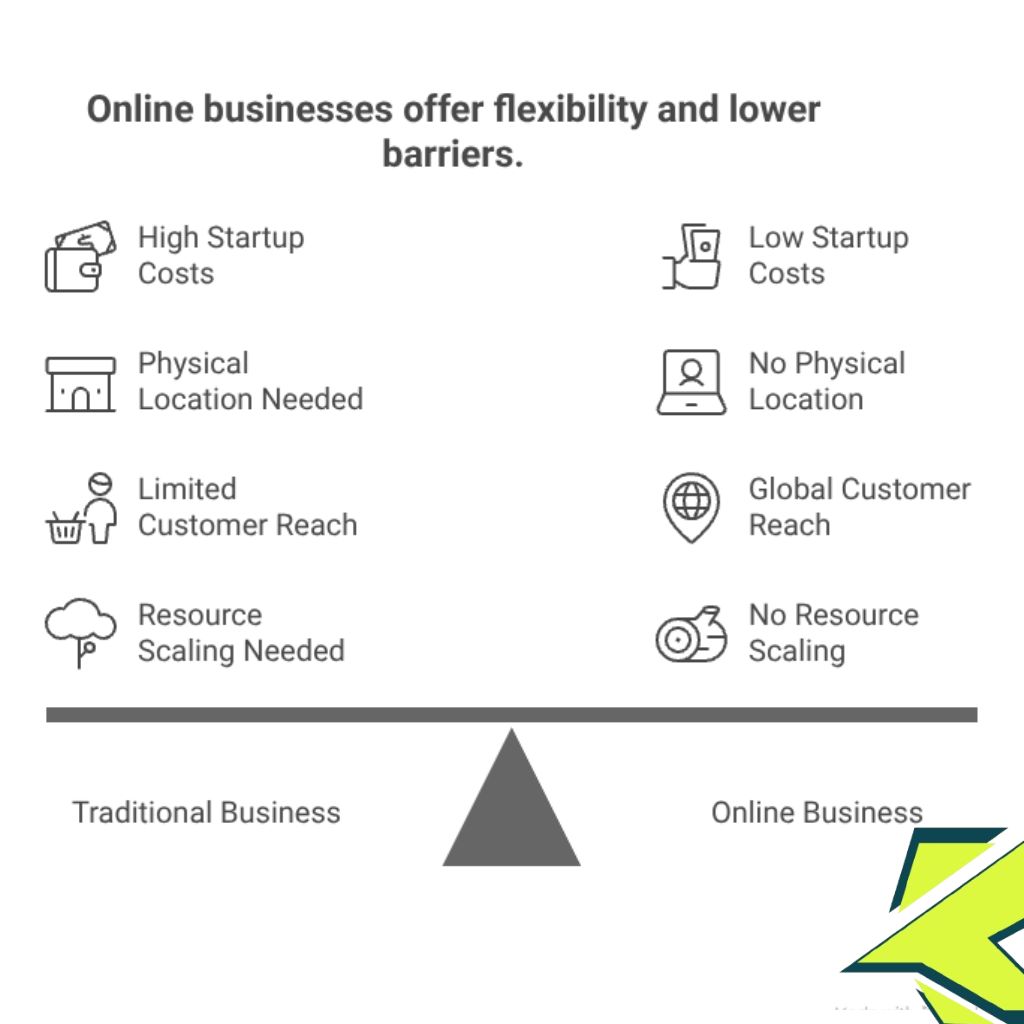
Starting a traditional business requires money, inventory, staff, and a physical location. But an online business removes almost all of these barriers. You can work from your home, use free tools, reach global customers, and scale your income without needing extra physical resources. This flexibility is exactly why millions of people are moving toward online entrepreneurship. Whether you are a student, a job holder, or someone exploring side income, building an online business gives you more control over your time and financial future.
Step 1: Choose a Profitable Online Business Idea
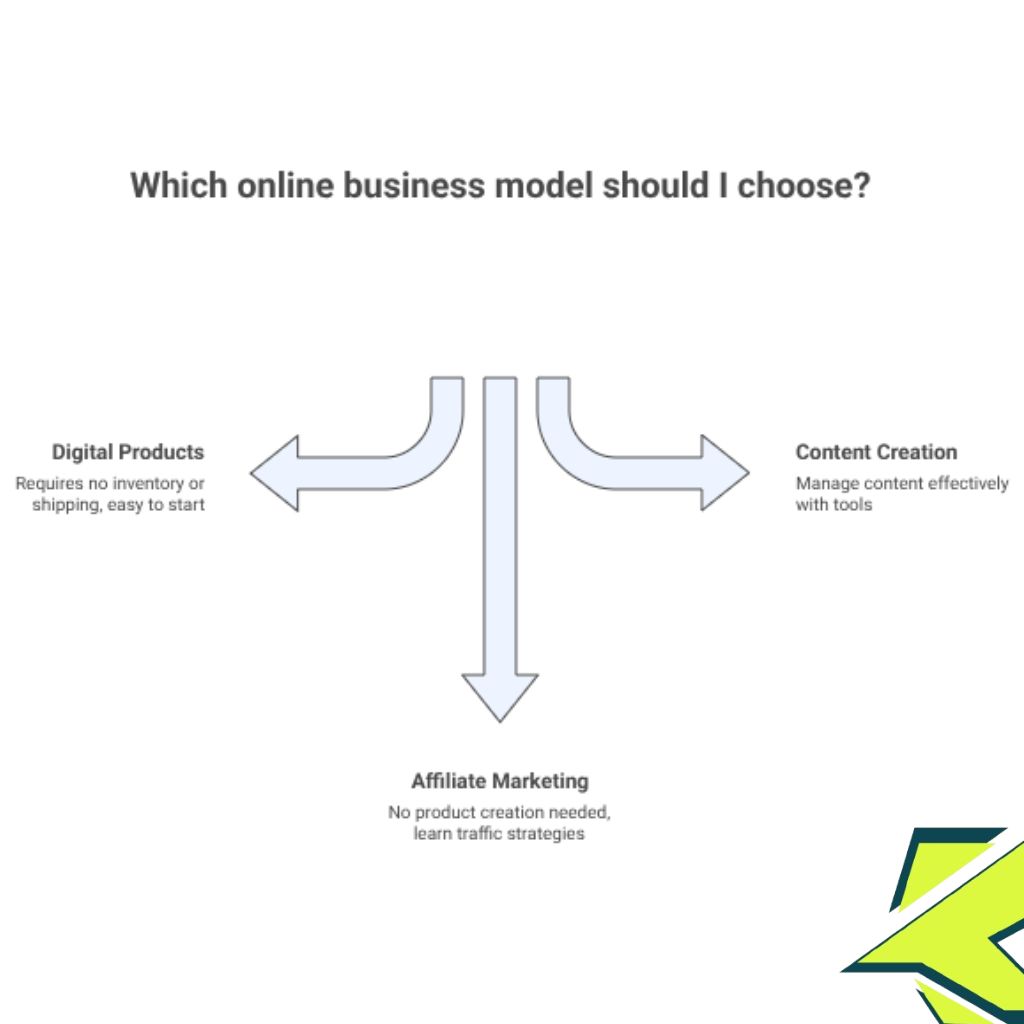
You don’t need a perfect idea. Instead, choose something simple that solves a real problem. The best beginner-friendly business models include digital products, services, affiliate marketing, content creation, and print-on-demand. Among these, digital products are often the easiest to start because they require no inventory or shipping. If you want to jump-start your digital product journey, the Digital Starter Pack provides ready-to-sell templates and materials that reduce your workload dramatically.
Affiliate marketing is another great model, especially for beginners who don’t want to create their own products immediately. Inside Affiliate Growth Academy, you can learn practical traffic and conversion strategies without guesswork. If content creation is your focus, the Creators Productivity Kit helps you manage scripts, planning sheets, and content calendars in a more organized way.
Step 2: Validate Your Idea Before You Build Anything
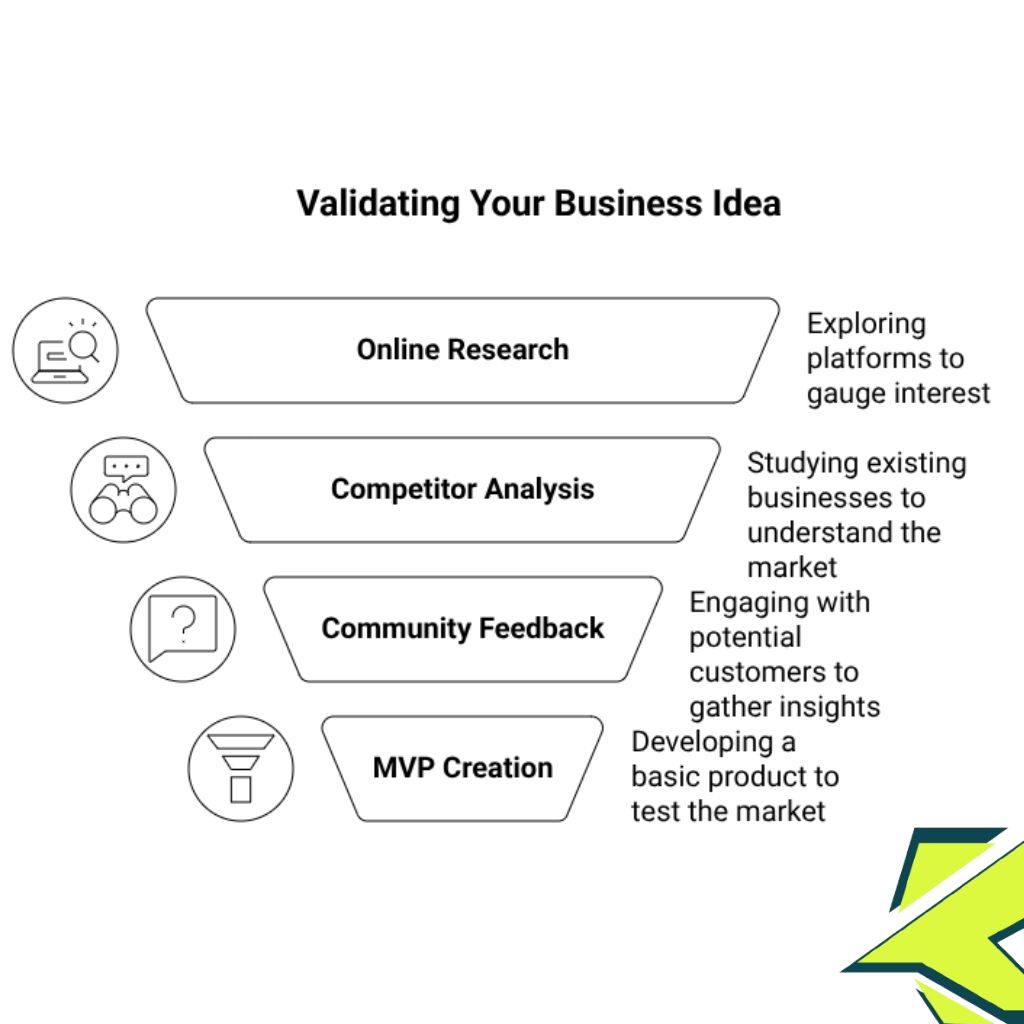
Many beginners fail because they create something nobody wants. Validation protects you from this mistake. Start by searching your idea on platforms like Google, YouTube, Reddit, and TikTok. If people are asking questions, consuming content, or buying similar products, it shows demand. Then, study your competitors. Their presence is not a threat—it’s proof that the idea works.
Next, join Facebook groups or online communities and ask simple questions such as:
“What is your biggest struggle with _____?”
Real answers help you refine your idea. Finally, create a small MVP (Minimum Viable Product). This could be a short guide, a template, or a simple service package. Don’t overbuild. Test the waters first. The Digital Starter Pack includes validation tools that can help you speed up this phase.
Step 3: Pick a Business Model That Matches Your Goal
Different models give different outcomes. If you need quick income, choose services like design, writing, editing, or social media management. If you want passive income, choose digital products or affiliate marketing. If your aim is long-term brand building, content creation is your best option.
Here’s a simple table for clarity:
| Your Goal | Best Business Model |
|---|---|
| Quick income | Services |
| Passive earning | Digital products / Affiliate marketing |
| Long-term brand | Content creation |
| Scaling big | Mix multiple models |
When you reach the stage of expansion, the Entrepreneur Empire Bundle gives you advanced systems, funnels, and business frameworks to grow like a full digital entrepreneur.
Step 4: Build Your Online Presence
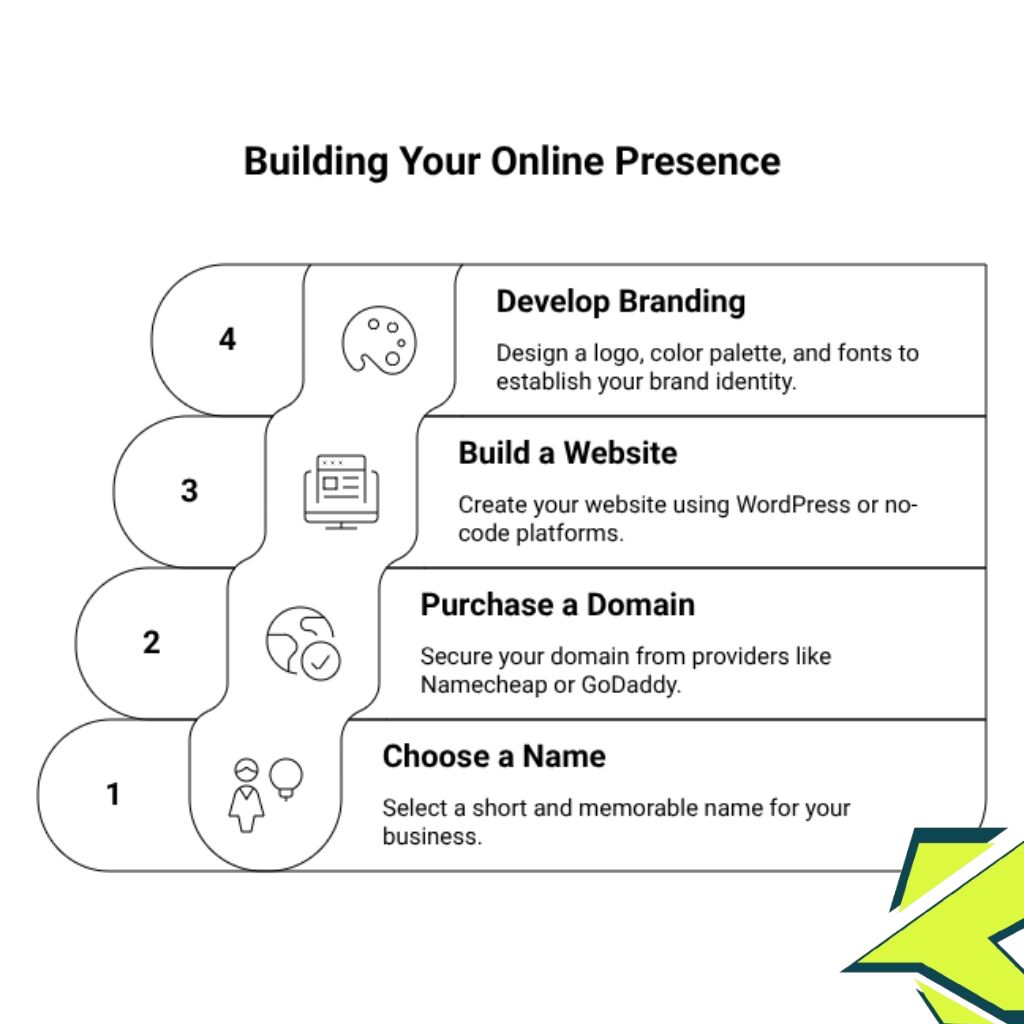
Your online presence starts with a simple foundation: a name, a domain, branding, and a website. Choose a short and memorable name, then purchase a domain from Namecheap or GoDaddy. You can build your website either using WordPress (best for SEO and blogging) or no-code platforms like Shopify, Wix, or Systeme.io.
Branding is also important because it creates a strong first impression. You need a basic logo, color palette, fonts, and banner design. If this part feels overwhelming, the Marketer’s Power Kit provides ready-made branding templates and design materials to set up your visual identity quickly.
Step 5: Create Your First Offer (Your MVP)
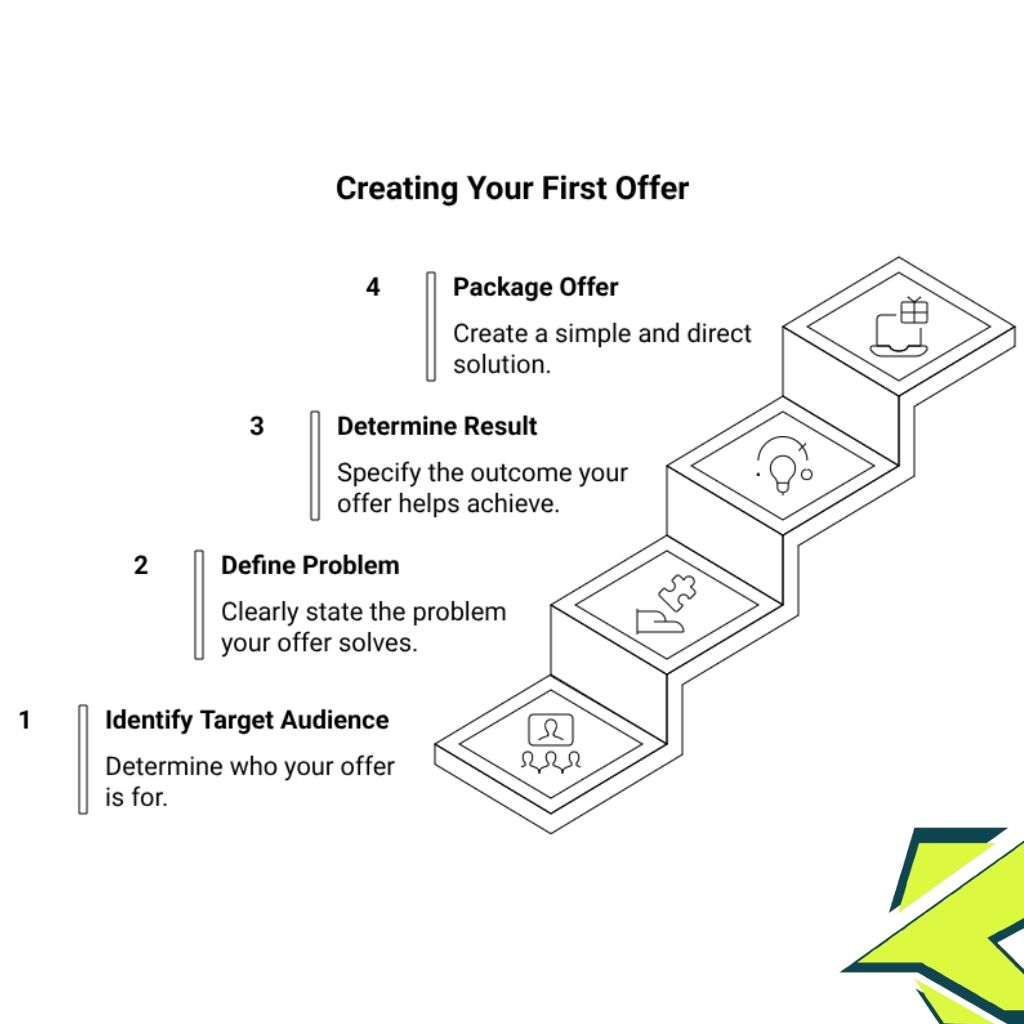
Your first offer does not need to be perfect. It only needs to solve one clear problem for one target audience. Start with something small like a PDF guide, a template, a mini course, or a service package. The goal is to help someone simply and directly. Focus on clarity over perfection.
Your offer should answer three questions:
- Who is it for?
- What problem does it solve?
- What result does it help them achieve?
If you’re unsure how to package your offer, the Digital Starter Pack includes frameworks that reduce confusion and help you create something people will understand immediately.
Step 6: Set Up Your Essential Tools
Too many beginners get stuck choosing tools. You don’t need a long list. Start with a simple toolbox:
- Website: WordPress, Systeme.io, Shopify
- Email marketing: MailerLite, ConvertKit, Systeme.io
- Design: Canva
- Productivity: Notion, Trello, ClickUp
These basic tools are enough to build your first version of your business. If you’re a content creator, the Creators Productivity Kit gives you pre-built systems that make planning and producing content much easier.
Step 7: Launch Your Online Business
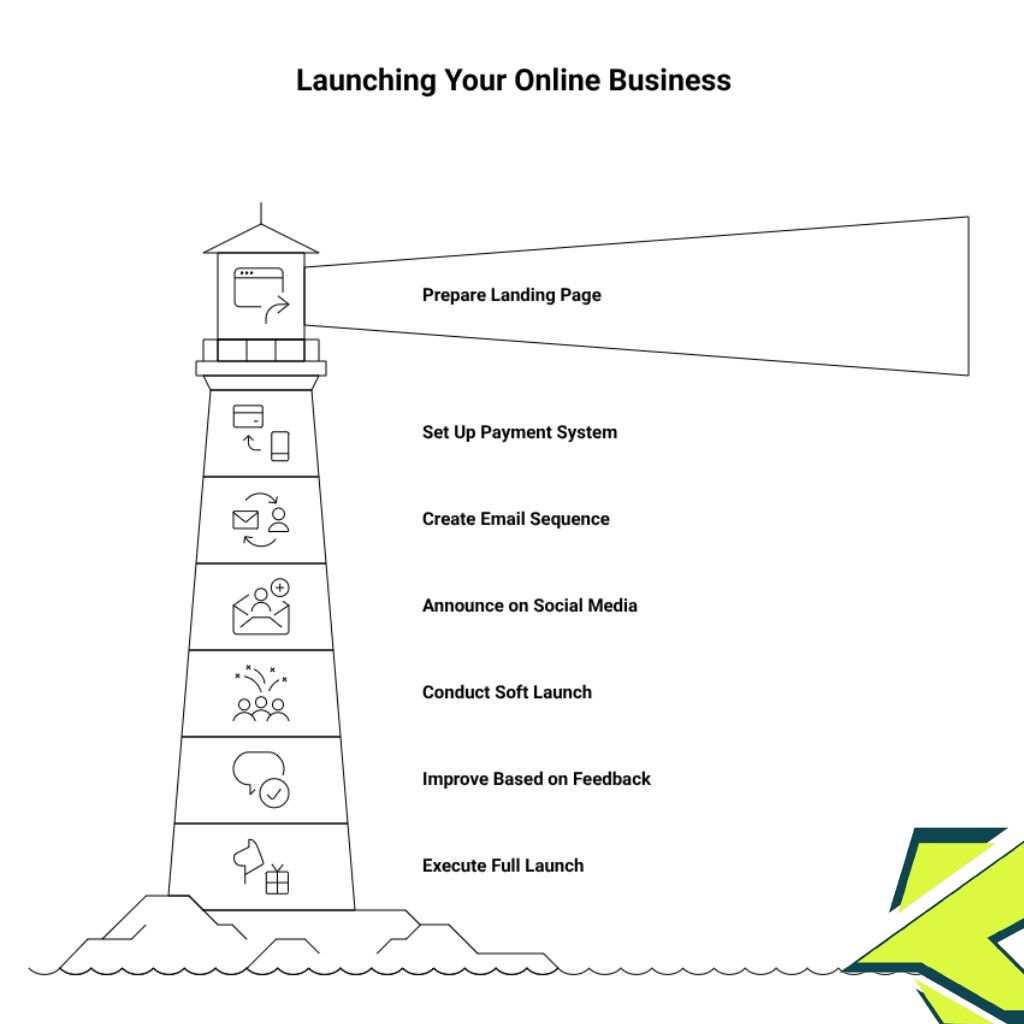
Your first launch doesn’t have to be large or perfect. You simply need to publish your offer and let people know it exists. Prepare a small landing page, a payment system, and a short email sequence. Then announce your offer on your social media accounts.
A soft launch is a small test with a limited audience. It helps you collect feedback so you can improve before going public. For full launches, you can use marketing templates and ideas from the Marketer’s Power Kit to simplify your promotional process.
Step 8: Get Your First 10 Customers
Your first 10 customers are the most important because they give you confidence and real feedback. Start by sharing your offer inside Facebook groups, creating small helpful posts, offering beta pricing, and talking directly to people who show interest. You can create short videos, write mini guides, or share results to build trust.
If you are focusing on affiliate marketing, strategies inside Affiliate Growth Academy can help you earn your first commissions using simple but effective tactics.
Step 9: Market and Grow Your Business
Growth comes from consistency. You need to create helpful content regularly, build your email list, and improve your website’s SEO. Content marketing helps you bring traffic, while email marketing converts that traffic into customers. Over time, building simple funnels will help automate your sales process.
To scale your operations, the Entrepreneur Empire Bundle provides advanced systems, automation templates, and business structure guides that help you run your business like a pro.
Common Beginner Mistakes You Should Avoid
Many beginners delay success by making simple mistakes: jumping from idea to idea, aiming for perfection, relying only on social media, ignoring email list building, or using too many complicated tools. Staying focused, starting small, and improving step-by-step is the real formula for progress.
Frequently Asked Questions
Can I start with no money?
Yes. Use free tools and begin with services or affiliate marketing
Do I need a website on Day 1?
Not immediately. But a website becomes important for long-term growth and trust
How long until I earn?
Services can bring income in a few weeks. Affiliate marketing and digital products usually take a bit longer but provide bigger long-term rewards
What if I have no skills?
You can learn any online skill within 10–20 days using free resources. Practice is the key
Conclusion: Today Is the Perfect Time to Start
Starting an online business doesn’t require luck or special talent. It requires clarity, consistency, and a little courage to begin. If you start with the steps in this guide—choosing an idea, validating it, creating a simple offer, launching it, and promoting it—you will see real progress.
To support your journey, here are helpful tools you can explore:
- Digital Starter Pack – Create and sell digital products quickly
- Marketer’s Power Kit – Launch faster with ready-made marketing assets
- Creators Productivity Kit – Stay organized as a creator
- Entrepreneur Empire Bundle – Scale your full business operations
- Affiliate Growth Academy – Learn affiliate marketing the right way
Your journey can begin today. The first step is always the hardest, but also the most important.

Hi, I am the founder of KlickTrust. I’m a digital strategist and builder with a deep passion for creating systems that help people build faster online. I started KlickTrust to save creators, freelancers, and entrepreneurs from wasting months starting from scratch by giving them access to practical, ready-to-use digital tools, templates, and automation systems that actually work in the real world.
At KlickTrust, I focus on speed, trust, and empowerment, so you can launch, grow, and scale with confidence.

