
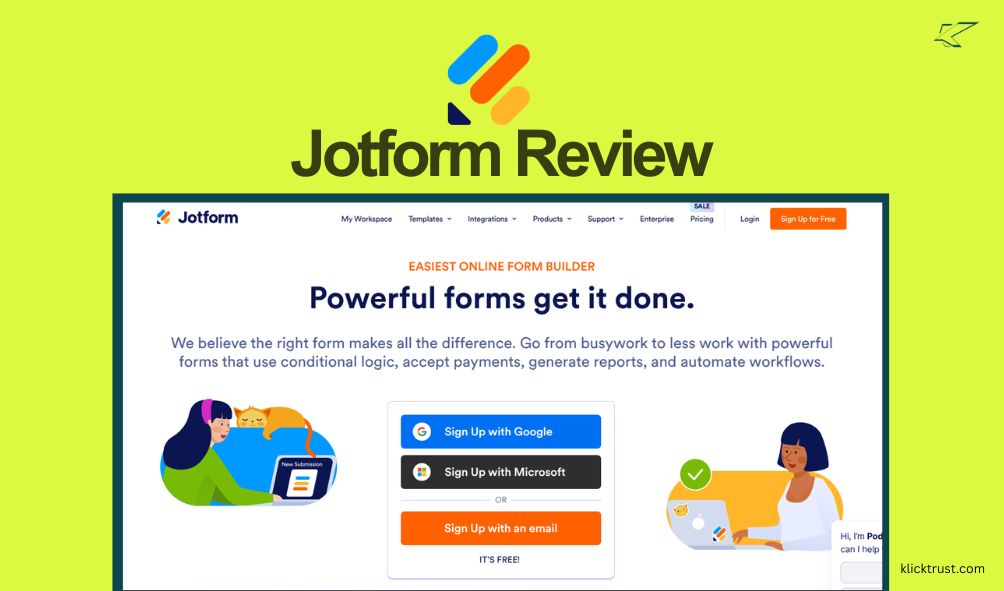
Choosing the right form builder can make or break how smoothly a business collects data, payments, or registrations. This Jotform review explores why Jotform stands out as a powerful no-code form maker, from its versatile templates to advanced conditional logic forms and payment integration forms. Compared to tools like Google Forms or Typeform, Jotform offers robust automation, HIPAA-compliant forms, and support for unlimited form submissions, making it suitable for small businesses, events, and healthcare workflows. This review breaks down Jotform pricing, free plan limits, and essential features to help decide if it’s worth investing in for 2026.
Why I Started Using Jotform (Real-World Use Case)
Finding a reliable form builder isn’t just a convenience—it can make the difference between smooth operations and endless headaches. Many businesses start with Google Forms because it’s free and easy, but it quickly hits a ceiling.
In 2026, simple data collection isn’t enough. I switched because I needed AI Agents to categorize my leads automatically and Stripe integration to get paid instantly. If you are serious about your digital business, you can’t afford a basic plan that caps your growth. [Explore Jotform’s New AI Agent Features Here]
Complex surveys, conditional logic, and payment collection often break simple tools. For example, tracking event registrations or processing payments becomes a manual mess without automation. That’s where Jotform steps in—combining an intuitive no-code builder with HIPAA-compliant security and professional templates that Google Forms or Typeform can’t match.
That’s where Jotform steps in. Unlike basic tools, it combines an intuitive no-code form builder with powerful features such as payment-integration forms, templates, and HIPAA-compliant options. Businesses, schools, and freelancers often turn to Jotform because it handles real-world demands that Google Forms or even Typeform can’t.
In real scenarios, Jotform shines when forms need to adapt on the fly. Conditional logic, automated notifications, and seamless form automation tools prevent errors and save hours of manual work. For organizations collecting sensitive data or running paid registrations, these features aren’t just convenient—they’re essential. This review will explain why Jotform has become a go-to solution and what makes it worth considering in 2026.
What Is Jotform? (Quick Overview)
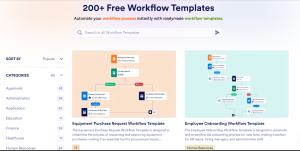
Jotform is more than just a form builder—it’s a versatile online form creator that lets businesses, schools, freelancers, and healthcare providers collect data, process payments, and automate workflows without writing a single line of code. Think of it as a Swiss Army knife for digital forms: everything from simple surveys to HIPAA-compliant forms and payment integration forms fits neatly into one platform.
Unlike basic tools such as Google Forms, Jotform doesn’t just collect answers—it adapts to the user. Conditional logic, automated notifications, and intuitive no-code form maker features mean forms can change dynamically depending on responses. This makes it ideal for event registrations, customer feedback, order forms, and even medical intake forms where accuracy and flexibility matter.
The platform is built for real-world demands. Small businesses can handle payments via Stripe or PayPal, schools and nonprofits can run complex surveys with unlimited form submissions, and freelancers can streamline client onboarding. Even organizations that need high security benefit from HIPAA-compliant options and encrypted data handling. In short, Jotform bridges the gap between simplicity and professional-grade functionality that standard form tools often lack.
With its combination of form templates, powerful integrations, and form automation tools, Jotform provides a polished, scalable solution for anyone who wants forms that work as hard as they do. Whether it’s collecting payments, running surveys, or managing sensitive data, it’s built to make form building effortless and reliable.
Jotform Key Features That Matter in 2026
Jotform isn’t just another online form builder—it’s a full-featured platform designed to handle everything from simple surveys to complex HIPAA-compliant forms. For businesses, schools, or freelancers, knowing which features actually make a difference can save hours of trial and error. Here’s a breakdown of the key tools that make Jotform stand out in 2026.
No-Code Online Form Builder
Creating forms shouldn’t require a degree in coding, and Jotform proves that. Its drag-and-drop interface lets anyone design professional forms in minutes. Everything from adjusting layouts to adding images or widgets is intuitive. On top of that, all forms are fully mobile-friendly, meaning your audience can submit surveys, registrations, or payments seamlessly from a phone or tablet. For small businesses handling clients on the go, this is a game-changer.
Conditional Logic & Smart Forms
Not all forms are created equal. Conditional logic forms let fields appear or hide based on user input, creating a smooth, personalized experience. For example, if someone selects “attending an event,” extra fields for meal preferences or guest count appear automatically. This feature isn’t just convenient—it reduces errors, prevents irrelevant questions, and makes your forms feel smarter and more professional.
Jotform Templates Library
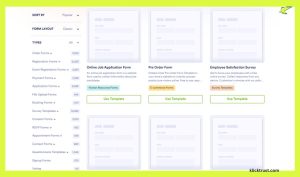
Sometimes, starting from scratch is overwhelming, and that’s where Jotform templates shine. With pre-built forms for event registration, lead generation, surveys, and payments, the platform lets users hit the ground running. Whether organizing a corporate webinar or collecting RSVPs for a small community event, these templates save time while staying customizable. This library consistently ranks as one of the best assets for 2026 users looking to streamline form creation.
Payment Integration Forms
Collecting payments directly through forms is simpler than ever. Jotform supports Stripe, PayPal, and Square, making one-time payments and subscriptions seamless. You can send invoices, set up donations, or sell tickets without redirecting users to another platform. For anyone running events, online courses, or small businesses, this Jotform payments functionality removes a major friction point in customer transactions.
HIPAA-Compliant Forms
Security and compliance aren’t optional for healthcare or sensitive data collection. Jotform offers HIPAA-compliant forms, ensuring that patient intake, medical surveys, or sensitive feedback stays protected. Combined with encrypted submissions and access controls, this feature transforms Jotform into a serious choice for clinics, therapists, and other health professionals who need secure digital forms.
Form Automation Tools
Filling out forms is only half the battle—processing responses efficiently is what saves time. Jotform’s form automation tools handle this beautifully. Automated email alerts, syncing with Google Sheets, or integrating directly with CRM systems ensure submissions trigger the right actions immediately. For busy teams, this reduces manual work and keeps workflows moving smoothly.
Jotform Pricing Plans Explained
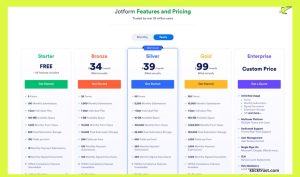
Understanding Jotform pricing can feel like navigating a maze, especially for small businesses trying to balance features with cost. Jotform offers a mix of free and paid plans designed to fit different needs—from casual users testing the waters to businesses that need heavy-duty form automation and payment integration forms. Knowing what each plan offers can save frustration, prevent hidden costs, and ensure the platform grows with your workflow.
Which Jotform Plan is Best for Your ROI?
While Jotform offers a Free Plan, most professional businesses find it too restrictive (100 submission limit). To avoid your forms going offline during a launch, I recommend:
-
Bronze Plan: Best for freelancers needing to remove branding and take payments.
-
Silver Plan: The “Sweet Spot” for 2026—includes HIPAA and higher limits.
-
Gold Plan: For high-volume agencies and large-scale events.
Action Tip: Start with the plan that fits your next 30 days of traffic. You can always scale up later. View Full 2026 Pricing Comparison
Upgrading makes sense when the free plan limits start blocking productivity. For example, if the free plan’s 100 submissions are reached regularly, or if payment collection is critical, moving to Bronze or Silver ensures forms can scale smoothly without interruptions.
In short, Jotform pricing is structured to grow with your business. Small businesses can start free, but scaling, professional branding, and advanced automation usually make a paid plan worthwhile. Knowing your audience size and workflow needs will help determine which tier delivers the best value in 2026.
Jotform vs Google Forms (Comparison)
| Feature | Google Forms | Jotform (Professional) |
| Payments | No | Yes (Stripe/PayPal) |
| AI Automation | No | Yes (Built-in Agents) |
| Professional Branding | No | Yes (Remove Logos) |
| Security | Standard | HIPAA Compliant |
| Direct Access | [Try Free] | See Pricing Plans |
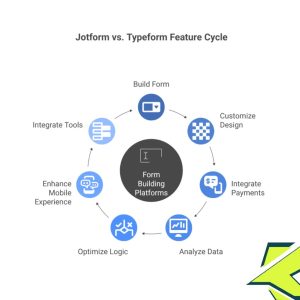
Jotform vs Typeform — Which Is Better for Payments?
Typeform has a slick interface and conversational style that makes surveys fun, but when it comes to payment integration, it’s a different story. Jotform allows seamless connections with Stripe, PayPal, and Square for both one-time payments and subscriptions. That means selling tickets, processing donations, or managing course fees can all happen without redirecting users elsewhere.
Payment fees between the two are comparable, but Jotform’s approach is more straightforward and flexible, especially for small businesses or organizations running multiple forms at once. Customization is another edge: Jotform lets forms match your branding, include conditional logic, and even trigger automated workflows after a payment is submitted. Typeform is beautiful, but Jotform is practical—it turns forms into functional, revenue-generating tools.
The checkout experience is smoother, too. With Typeform, adding payment fields can feel like an afterthought, while Jotform integrates it natively. From subscriptions to invoices, every transaction is tracked and manageable. For anyone serious about payment integration forms, Jotform clearly pulls ahead, offering the balance of design, flexibility, and automation that keeps both users and clients happy. For a detailed head-to-head, check out our Jotform vs Typeform Comparisons for more insights on features, pricing, and workflow differences.
How to Use Jotform for Payments
Accepting payments directly through forms doesn’t have to be complicated, and Jotform makes it surprisingly smooth. Start by connecting your Stripe, PayPal, or Square account—the setup is mostly a few clicks. Once linked, any form can instantly collect one-time payments or subscriptions, so event tickets, course fees, or donations flow straight to your account without extra steps.
Sending receipts is automatic, too. Users receive confirmation emails immediately after submitting a payment, which reduces confusion and eliminates manual follow-ups. Behind the scenes, form automation tools track every transaction, making it easy to reconcile sales or integrate the data with your CRM or Google Sheets.
Think of it like turning a simple survey into a tiny cash register that runs itself. No coding, no plugins—just reliable, trackable payments right in your forms. This is why businesses, event organizers, and online course creators lean on Jotform for payment integration forms that actually work in the real world.
Using Jotform for HIPAA-Compliant Forms
Collecting sensitive information, like patient data, requires more than a standard form. Jotform’s HIPAA-compliant forms mode ensures submissions are encrypted, securely stored, and accessible only to authorized personnel. This isn’t just a checkbox; it’s peace of mind for clinics, therapists, and any business handling confidential data.
Activating HIPAA mode is straightforward. Once enabled, forms automatically follow strict compliance rules, including encrypted submissions, secure file uploads, and audit trails. Conditional logic forms and form automation tools still work seamlessly, letting users create dynamic, responsive forms without compromising security.
For real-world use, healthcare providers rely on these forms for patient intake, appointment scheduling, and telehealth consent—all while staying compliant. It’s the digital equivalent of having a locked filing cabinet that’s accessible anywhere, anytime, without risking sensitive information.
Pros & Cons of Jotform
When evaluating any tool, it’s important to see both sides. Jotform is packed with features that make form building effortless, but it’s not perfect for every scenario. Here’s a clear breakdown of its strengths and limitations.
Pros
- Powerful Form Builder: Jotform makes creating forms simple yet professional. The drag-and-drop interface, conditional logic forms, and customizable templates turn what could be a tedious task into something almost enjoyable. Even complex surveys or event registrations feel straightforward.
- Built-In Payments: Collecting payments is seamless. Whether it’s Stripe, PayPal, or Square, forms can handle one-time or subscription payments without redirecting users elsewhere. For small businesses and online events, this integration can save hours of manual work.
- HIPAA Compliance: For healthcare or sensitive data, security isn’t optional. Jotform’s HIPAA-compliant forms ensure that patient or client information stays protected, offering peace of mind alongside convenience.
- Templates & Automation: Pre-built templates speed up form creation, and automation tools like email notifications, Google Sheets syncing, and CRM integrations make workflows smooth. These features prevent errors and help businesses stay organized effortlessly.
Cons
- Free Plan Limits: While the free plan is useful for testing, it caps submissions and active forms. Growing businesses will likely outgrow it quickly, meaning an upgrade is almost inevitable.
- Can Feel Overwhelming: With so many features packed in, beginners might feel a bit lost at first. The sheer number of options can make the setup experience slightly intimidating.
- Paid Plans Cost More Than Basic Tools: For simple forms, cheaper alternatives exist. Jotform’s pricing is justified by advanced features, but it can feel like overkill for users who don’t need automation, payments, or HIPAA compliance.
Who Jotform Is Best For
Jotform isn’t a one-size-fits-all solution, but it shines for certain users:
- Small Businesses: Perfect for those who need to handle customer inquiries, registrations, and payments without juggling multiple tools.
- Event Organizers: RSVP forms, ticket sales, and surveys all work seamlessly with templates and payment integration.
- Clinics & Healthcare Providers: HIPAA-compliant forms keep patient data secure while streamlining intake and feedback collection.
- Freelancers: Client onboarding, proposals, and payments can all be handled in a single platform.
Online Sellers: Product orders, subscriptions, and donations can be collected directly through forms, simplifying sales workflows.
In short, Jotform is ideal for anyone who needs more than just a basic survey. Its combination of flexibility, automation, and security makes it a tool that grows with your business or project.
Who Should Not Use Jotform
While Jotform is powerful, it’s not for everyone. If all that’s needed is a single survey or a basic contact form, Jotform might feel like overkill. The platform’s robust features—conditional logic, payment integration forms, and automation—shine when there’s volume or complexity. For someone on a tight budget who doesn’t need advanced workflows, free alternatives like Google Forms can cover the basics without any cost. Think of Jotform as a Swiss Army knife: amazing when you need multiple tools, but unnecessary if all you need is a simple blade.
My Recommendation (Is Jotform Worth It in 2026?)
Jotform is worth considering if forms are more than a checkbox in a workflow. Small businesses, event organizers, freelancers, and healthcare providers benefit from templates, payment integration, and HIPAA-compliant forms, especially when managing multiple submissions or collecting sensitive data.
However, it can be overkill for casual users or one-off projects. If submissions are minimal, payments aren’t involved, and advanced automation isn’t required, a simpler tool may be more efficient and budget-friendly.
For those who need the power without the cost, the free plan is a solid way to test the waters, while the Bronze or Silver plans unlock scalability, automation, and professional branding. Alternatives like Typeform for conversational forms or Google Forms for simplicity are worth considering, depending on priorities.
In short, Jotform is ideal for anyone seeking a flexible, no-code form maker that can grow with their needs in 2026—combining reliability, automation, and ease of use in one polished package. Try now from here.
FAQs:
Q1: Is Jotform free to use?
Yes, Jotform offers a free plan that’s perfect for testing or small projects. You get up to 5 active forms, 100 monthly submissions, and access to basic templates. It’s a great way to explore the platform, but growing teams or businesses will likely need a paid plan for unlimited form submissions and advanced features like payment integration forms.
Q2: Can I accept payments with Jotform?
Absolutely. Jotform supports Stripe, PayPal, and Square, making it easy to collect one-time payments or subscriptions directly through your forms. Invoices, ticket sales, donations, or online course fees can all be handled without redirecting users elsewhere. Combined with form automation tools, it’s like having a tiny, self-running cash register in your forms.
Q3: Is Jotform better than Google Forms?
It depends on your needs. Google Forms works for basic surveys or polls, but it lacks conditional logic forms, payment collection, and advanced automation. Jotform adds flexibility, professional templates, HIPAA-compliant forms, and integrations with CRM and Google Sheets. Think of Google Forms as a simple bike—good for short trips—while Jotform is an SUV built to carry a full load.
Q4: Is Jotform HIPAA compliant?
Yes. For healthcare providers or anyone handling sensitive data, Jotform offers HIPAA-compliant forms. Submissions are encrypted, securely stored, and accessible only to authorized personnel. Conditional logic, templates, and automation still work while maintaining strict security standards—making it ideal for clinics, telehealth services, and confidential surveys.
Q5: What’s the best Jotform plan for a small business?
For small businesses, the Bronze plan usually hits the sweet spot. It removes Jotform branding, increases submission limits, and supports payment integration forms. Growing businesses or event organizers might benefit from Silver for more forms, advanced automation, and CRM integration. Start with the free plan to test, then upgrade when submissions or payments become critical.
Final Verdict
Jotform is a powerful, flexible, and reliable online form builder that scales from small projects to complex workflows.
- Power: Handles conditional logic, payment integration forms, HIPAA-compliant forms, and automation with ease.
- Value: Free plan is great for testing; paid plans unlock professional features that save time and reduce errors.
- Who it’s for: Small businesses, event organizers, healthcare providers, freelancers, and online sellers looking for a no-code form maker that works as hard as they do.
In short, Jotform isn’t just a tool—it’s a complete form ecosystem that makes creating, automating, and managing forms effortless in 2026. For anyone serious about collecting data, payments, or registrations professionally, it’s a top choice. So, don’t let a “free” tool hold back your professional image. If you need a form builder that works like an employee, Jotform is the only choice.
Claim Your Jotform Account & Start Automating

Hi, I am the founder of KlickTrust. I’m a digital strategist and builder with a deep passion for creating systems that help people build faster online. I started KlickTrust to save creators, freelancers, and entrepreneurs from wasting months starting from scratch by giving them access to practical, ready-to-use digital tools, templates, and automation systems that actually work in the real world.
At KlickTrust, I focus on speed, trust, and empowerment, so you can launch, grow, and scale with confidence.

