

You know that feeling, right? You sit down at your desk with the best intentions. You’re going to crush your work today. But then your phone buzzes. An email pops up. Before you know it, three hours have passed, and you’ve accomplished almost nothing. If this sounds familiar, you’re not alone. In fact, studies show that the average person gets distracted every 11 minutes. The good news? There are proven tools and strategies that can help you reclaim your focus and actually accomplish your goals.
Why Focus Matters More Than Ever
Let me be honest with you. Focus is becoming a superpower. The world is getting noisier, not quieter. There are more notifications, more emails, more meetings, and more things demanding your attention than ever before. This constant barrage of distractions makes it incredibly hard to concentrate on what actually matters.
But here’s the thing: when you can focus, you become unstoppable. You produce better work. You finish projects faster. You feel more accomplished. And somehow, even though you’re working smarter, it doesn’t feel as exhausting.
The secret? It’s not about having more willpower or being naturally disciplined. The secret is using the right tools to set yourself up for success. When you have the right systems in place, staying focused becomes almost automatic.
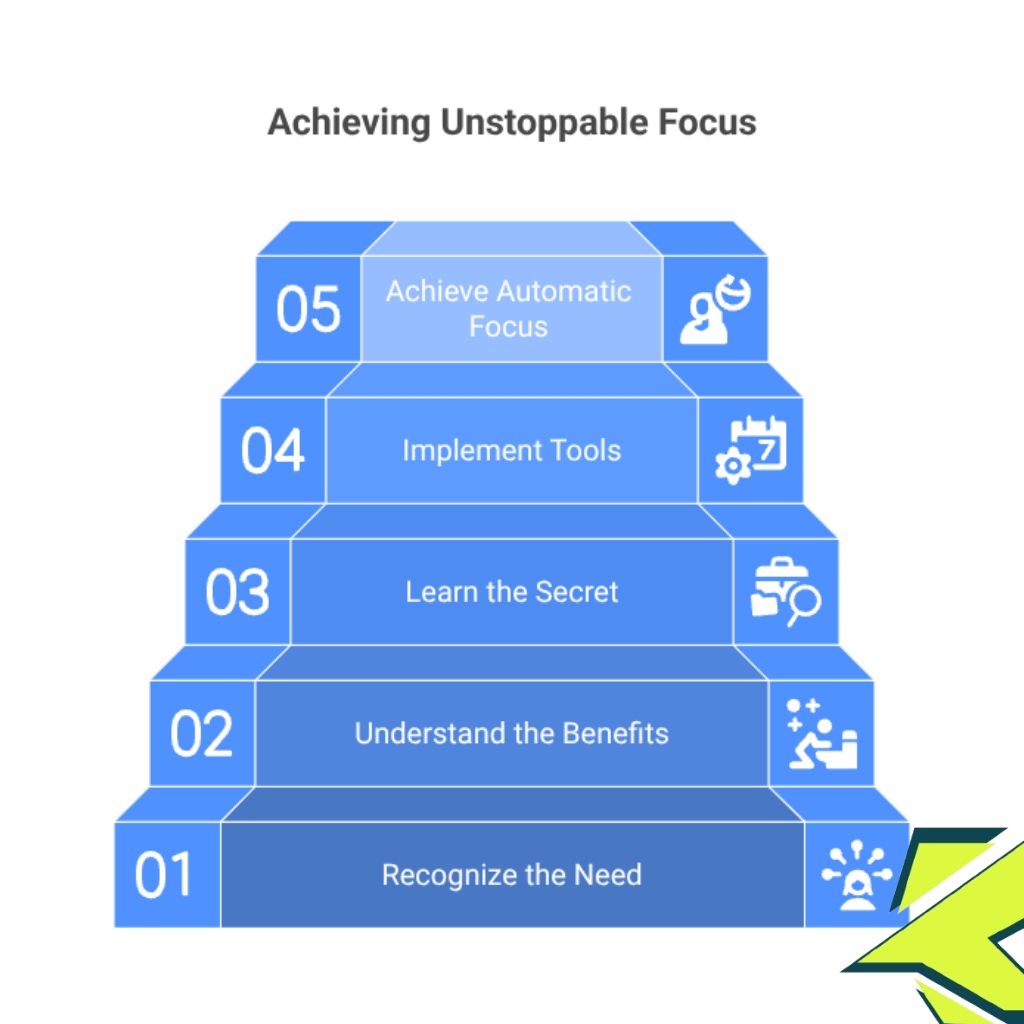
Understanding Your Focus Challenges
Before we jump into solutions, let’s talk about why you’re struggling to focus in the first place. It’s not your fault. Your brain isn’t wired for this modern world.
Our ancestors had to focus on one thing: surviving. They didn’t have notifications. They didn’t have social media. They had predators and food, and that’s pretty much it. Your brain evolved for that environment. But now you’re working in an environment that’s specifically designed to pull your attention in a thousand different directions.
Social media companies employ thousands of engineers whose only job is to make their apps more addictive. Email systems are designed to interrupt you constantly. Even your workplace culture often glorifies being busy and responding to messages immediately.
So when you struggle to focus, it’s not because you’re weak or lazy. It’s because you’re literally fighting against systems that were built to distract you. That’s why tools are so important. They help you fight back.
The Best Productivity Tools for Staying Focused
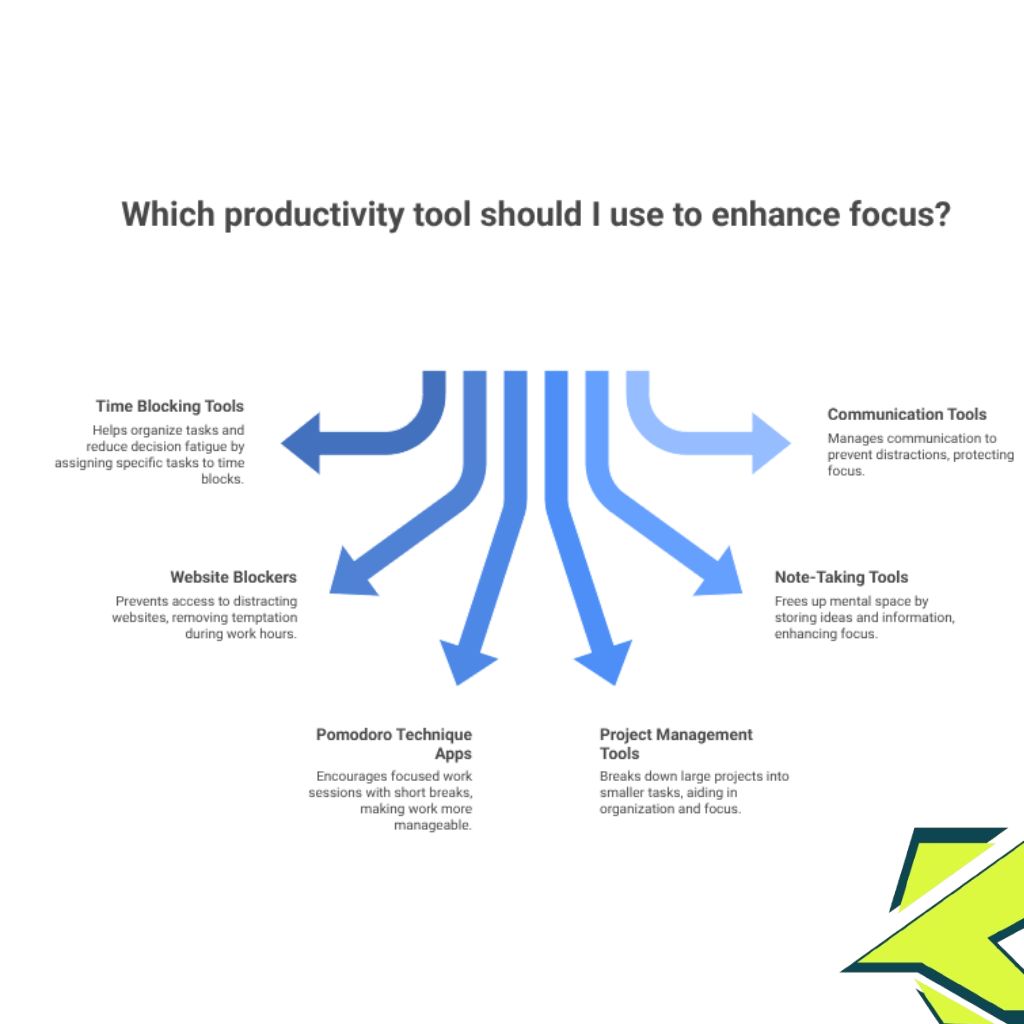
1. Time Blocking Tools: Todoist and Notion
Time blocking is simple but powerful. You divide your day into blocks of time and assign each block a specific task. You’re not trying to do everything at once. You’re committing to one thing in a particular period of time.
Tools like Todoist help you organize your tasks. Notion takes it even further and lets you create a visual calendar where you can see exactly what you’re doing at any given time. The beauty of these tools is that they remove decision fatigue. You don’t have to think about what to do next. The tool tells you.
Start with this: take the next week and block out your time in 90-minute chunks. That’s about how long most people can focus deeply before needing a break. Assign one task to each block. You’ll be amazed at how much you accomplish.
2. Website Blockers: Freedom and Cold Turkey
Let’s be real. You probably don’t have the willpower to ignore YouTube or Twitter if they’re sitting right there in your browser. So why try? Use a website blocker instead.
Freedom and Cold Turkey are tools that literally prevent you from accessing distracting websites during work hours. You set them up once, and then they do the work for you. You don’t have to resist temptation because temptation is literally removed from your reach.
Start blocking the sites that waste the most of your time. For most people, that’s social media, news sites, and entertainment platforms. Block them during your work hours. You can still access them during breaks if you want.
3. The Pomodoro Technique: Forest and Be Focused
The Pomodoro Technique is one of the oldest productivity methods out there. Here’s how it works: you work for 25 minutes, then take a 5-minute break. After four cycles, you take a longer 15 to 30-minute break.
Apps like Forest make this fun. Every time you start a pomodoro session, you plant a virtual tree. If you leave the app before your timer ends, the tree dies. It might sound silly, but it works. Over time, you build a forest. Seeing your forest grow becomes incredibly motivating.
Be Focused is another excellent app that works similarly. The key benefit of these apps is that they give you permission to ignore everything else for 25 minutes. Your email can wait. Your Slack messages can wait. Nothing is more important than this one task for the next 25 minutes.
4. Project Management Tools: Asana and Monday.com
If you’re working on bigger projects or with a team, you need a project management tool. These tools help you break large projects into smaller tasks. They help you see dependencies. They help you understand what needs to happen when.
Asana and Monday.com are both excellent. They might seem like overkill if you’re just managing your own work, but they’re incredibly helpful. They let you see the big picture while also keeping track of small details.
The focus benefit here is that you don’t have to hold everything in your head. You don’t have to remember all the steps. The tool keeps track of everything for you.
5. Note-Taking Tools: OneNote and Obsidian
Your brain is good at thinking. It’s not good at remembering. So stop trying to remember things. Write them down instead.
When you use a note-taking tool, you free up mental space. You’re not worrying about forgetting something important. The tool is storing it for you. This means your brain has more capacity to focus on the task at hand.
OneNote is simple and integrated with Microsoft products. Obsidian is more powerful if you want to build a personal knowledge base. Either way, use them. Write down ideas, decisions, and important information as you go.
6. Communication Tools: Slack with Do Not Disturb
Here’s a controversial take: constant communication is the enemy of focus. If someone can message you at any second, you can never truly focus.
That’s why you need to use your communication tools strategically. Set up Do Not Disturb hours. Tell people when you’re available. Use Slack’s status feature to let people know you’re in deep work mode.
It’s okay to not respond immediately. It really is. Most things aren’t emergencies. Most things can wait an hour or two. When you set boundaries around communication, you protect your focus.
Creating Your Personal Focus System
Now that you know about the tools, let’s talk about how to actually use them. Tools alone won’t help you. You need to build a system.
Here’s how to do it step by step:
Step One: Audit Your Current Situation
For one week, track where your time is going. Write down what you did each hour. When did you get distracted? What pulled your attention away? This data is gold. It shows you exactly where your biggest problems are.
Step Two: Identify Your Main Distractions
After your audit, look at the patterns. What are the top three things that pull your attention away from work? For some people, it’s social media. For others, it’s email. For others, it’s unnecessary meetings or conversations with coworkers.
Step Three: Choose Your Tools
Based on your main distractions, pick two or three tools that will help you. Don’t try to use every tool mentioned in this post. That’s actually counterproductive. Too many tools become their own distraction. Pick the tools that solve your specific problems.
Step Four: Set Up Your System
Spend an hour setting up your tools properly. Block the right websites. Create your time blocks. Configure your notifications. This setup is an investment that will pay off many times over.
Step Five: Give It Time
You won’t see results immediately. It usually takes two to three weeks for a new system to become automatic. Stick with it. Don’t abandon your system after two days because you’re not seeing results yet.
Step Six: Review and Adjust
Every two weeks, look at how your system is working. Are you more focused? Are you getting more done? What’s not working? What needs adjustment? Your system should evolve as you learn what works for you.
Building Habits That Stick
Tools are helpful, but habits are what actually change your life. Here’s how to build focus habits that actually stick.
Start Small
Don’t try to change everything at once. Pick one tool. Use it for one week. Build the habit. Then add another tool. This approach feels slower, but it’s actually faster because you’re more likely to succeed.
Track Your Progress
Put an X on a calendar every day you use your system. This is called the “never break the chain” method. It’s incredibly powerful. You’ll find yourself not wanting to break the chain. This little visual representation becomes motivating.
Prepare the Environment
Make it easy to focus. Close unnecessary browser tabs. Put your phone in another room. Tell people not to interrupt you during your focus hours. The easier you make it to focus, the more likely you are to actually do it.
Reward Yourself
When you complete a focus block or a productive day, celebrate it. You don’t need anything big. Maybe it’s a favorite snack. Maybe it’s 15 minutes of guilt-free social media. Maybe it’s just a moment to appreciate how much you accomplished.
These rewards aren’t frivolous. They’re how your brain learns that focus is good. They’re how you reinforce the habit.
Common Mistakes People Make with Productivity Tools
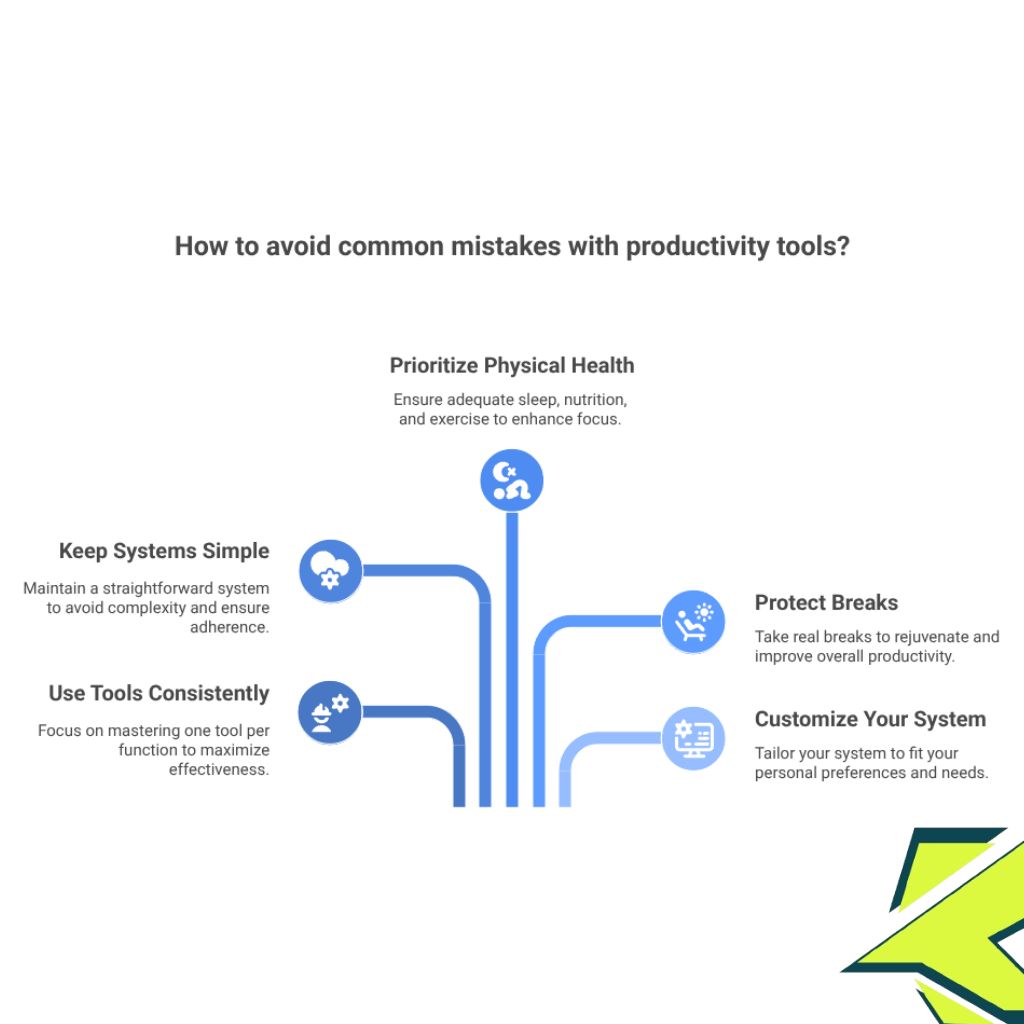
Let me share some mistakes that might help you avoid the same pitfalls.
Mistake One: Buying Tools Instead of Using Them
People buy productivity software and then never use it. They have seventeen different apps installed and they’re not actually using any of them. A tool is only useful if you actually use it. Pick one tool for each function and stick with it. Become an expert at using that one tool instead of being mediocre at using many tools.
Mistake Two: Making Your System Too Complicated
Your system should make life simpler, not more complicated. If you’re spending more time maintaining your productivity system than actually working, something is wrong. Keep it simple. Simple systems are the ones people actually stick with.
Mistake Three: Ignoring Physical Health
You can’t focus if you’re tired, hungry, or haven’t moved your body. Tools are important, but so is sleep, nutrition, and exercise. When you take care of your physical health, your focus improves dramatically. You’re not weak if you need sleep. Your body is telling you something important.
Mistake Four: Not Protecting Your Breaks
You need breaks. Real breaks. Not checking your phone breaks. But actual rest. If you go for hours without a real break, your focus will decline. Use your breaks to move your body, get outside, or just sit quietly. This sounds counterproductive, but breaks actually increase your overall productivity.
Mistake Five: Comparing Your System to Someone Else’s
What works for someone else might not work for you. Your friend might love Notion while you prefer Todoist. That’s fine. Build the system that works for your brain, not the system that works for someone else’s brain.
Frequently Asked Questions About Focus and Productivity Tools
Q: How long does it take to see results from using these tools?
A: Most people see small improvements within a few days. But real, significant changes usually take two to three weeks. Your brain needs time to adjust to new routines. Don’t give up too early. The improvements will come.
Q: Do I need to spend money on productivity tools?
A: No, you don’t. Most of these tools have free versions that are very good. You can build an excellent productivity system without spending a single dollar. That said, many people find that paid versions offer features that are worth the investment. It depends on your needs.
Q: What if I work with a team? How do I use these tools then?
A: Project management tools like Asana and Monday.com are specifically designed for teams. You can also use shared note-taking systems like OneNote. The key is making sure your team is aligned on which tools you’re using and how you’re using them. Too many different tools creates confusion.
Q: Will these tools work for everyone?
A: Honestly, no. Some people might try these tools and realize they work better with a completely different approach. That’s okay. These recommendations work for most people, but not for everyone. The important thing is experimenting until you find what works for you.
Q: What should I do if I keep falling back into old distraction habits?
A: This is normal. Your brain has built neural pathways around those habits. Changing them is hard. When you slip back, don’t give up. Just get back on track the next day. Perfection isn’t the goal. Progress is the goal.
Q: Is it possible to be too focused?
A: Yes, actually. If you’re hyper-focused to the point where you’re not taking breaks or talking to people, that’s not healthy. Balance is important. These tools should help you focus on important work, but they shouldn’t prevent you from living a balanced life.
Q: How often should I update my system?
A: Review your system every two weeks at minimum. Check in monthly to see if bigger changes are needed. Your life changes, your priorities change, so your system should change too. What worked last year might not work this year.
Q: Can these tools help with anxiety or ADHD?
A: These tools can definitely help. Having external structure can be incredibly useful for people with ADHD or anxiety. That said, if you have diagnosed ADHD or anxiety, talk to a professional about your situation. These tools can complement professional treatment, but they shouldn’t replace it.
Q: What’s the best first tool to start with?
A: Start with website blockers if you struggle with social media or news sites. Start with a time-blocking tool like Todoist if you struggle with organization. Start with the Pomodoro technique if you struggle with staying focused for long periods. Pick the tool that addresses your biggest problem first.
The Science Behind Focus
Let me share a bit of science that explains why these tools work.
Your brain has a limited amount of willpower each day. Scientists call this “ego depletion.” Every decision you make uses up willpower. Every time you resist temptation, you use up willpower. By the end of the day, your willpower is depleted.
This is why you can have amazing focus in the morning and then find yourself scrolling social media at 4 PM. It’s not weakness. It’s just how your brain works.
This is exactly why tools are so powerful. They remove decisions. Website blockers mean you don’t have to decide whether to visit Facebook. You simply can’t. Your willpower is protected because there’s nothing to resist.
Time-blocking tools work similarly. You don’t have to decide what to do next. The tool tells you. Again, your willpower is preserved.
This is also why breaks are so important. During breaks, your brain replenishes its willpower. This is why people who take regular breaks actually accomplish more than people who work straight through. This sounds counterintuitive, but it’s true.
Taking Action: Your 30-Day Focus Challenge
Knowing about these tools isn’t enough. You have to actually use them. So here’s what I want you to do.
Pick one tool from this article. Just one. Install it today. Set it up this week. Use it every day for 30 days.
After 30 days, assess how you feel. Are you more focused? Are you getting more done? Are you feeling less scattered?
If the answer is yes, then you know this approach works for you. Then you can add a second tool. If the answer is no, then try a different tool.
This simple experiment will show you what works for your brain. And once you know what works, you can build a system around it.
The 30-day challenge is powerful because it removes the pressure of perfection. You’re not committing to using these tools forever. You’re just committing to 30 days. That feels manageable. And once you’ve done 30 days, 60 days starts to feel reasonable. Before you know it, staying focused has become automatic.
Conclusion: Your Focus Journey Starts Now
You’ve made it to the end of this article, which means you care about your focus. That’s good. That’s the first step.
The next step is action. Pick one tool. Try it for 30 days. See if it works for you. If it does, you’ve just taken back control of your attention.
Remember, you’re not trying to become a productivity robot. You’re not trying to work 24/7. You’re trying to protect your time and energy for the things that matter to you. When you can focus deeply on meaningful work, life feels better. You feel more accomplished. You feel more in control.
The tools in this article aren’t magic. They’re just tools. But they can help you create the conditions where focus is possible. They can help you protect your attention from the systems designed to steal it. And they can help you do your best work.
So start today. Pick one tool. Set it up this week. Use it for 30 days. And then see how your life changes.

Hi, I am the founder of KlickTrust. I’m a digital strategist and builder with a deep passion for creating systems that help people build faster online. I started KlickTrust to save creators, freelancers, and entrepreneurs from wasting months starting from scratch by giving them access to practical, ready-to-use digital tools, templates, and automation systems that actually work in the real world.
At KlickTrust, I focus on speed, trust, and empowerment, so you can launch, grow, and scale with confidence.

