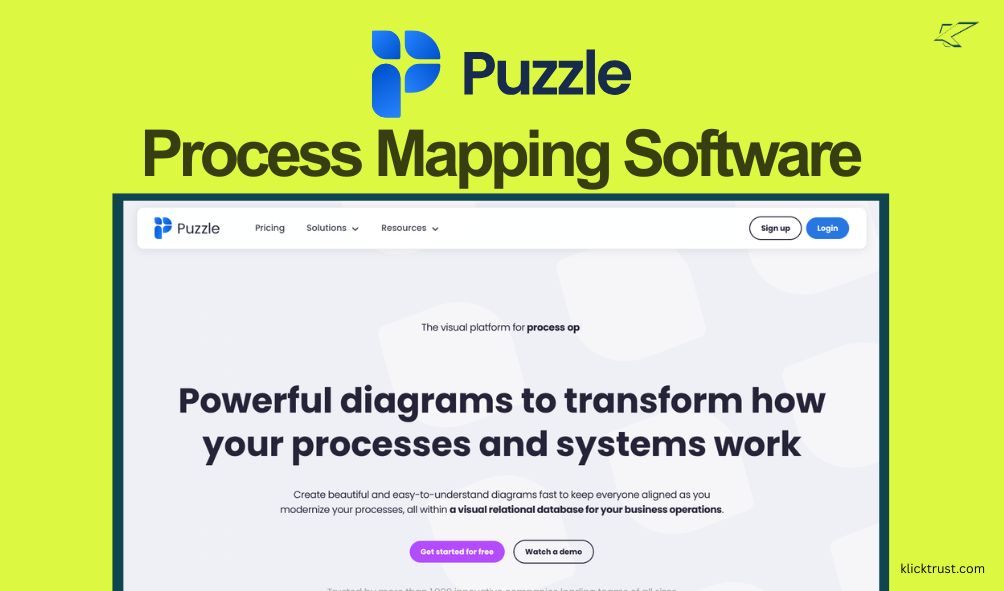
I’ve tested a lot of tools while mapping real client workflows, and honestly, Process Mapping Software Puzzle vs top alternatives became a question I kept asking myself mid-project, not during demos. When you’re juggling process mapping tools, workflow diagram software, and business process visualization, the wrong choice feels like using a paper map in Google Maps time. I’ve used Puzzle, Lucidchart, and Miro inside actual agency workflow canvas setups, from onboarding to Make integration diagrams and no-code process automation. In some projects, I even compared it to specialized tools like Bloom CRM to see how process visualization translates to client management. In this guide, I’ll share what actually works, what breaks under pressure, and how to choose the right tool for scalable business processes—so you don’t learn the hard way like I did. Let’s break it down together and save you weeks of trial and error.
What Is Process Mapping Software (And Why It Matters in 2026)
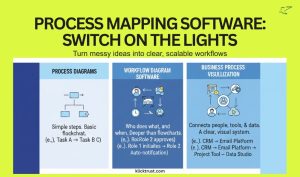
Process mapping software helps you see how work actually flows, not how you think it flows. These process mapping tools turn messy ideas into clear steps, so you can spot gaps, delays, and bottlenecks fast. I like to think of it as switching on the lights in a dark room—suddenly, everything makes sense. Here’s where many people get confused. Process diagrams show simple steps, like a basic flowchart. Workflow diagram software goes deeper and shows who does what and when, while business process visualization connects people, tools, and data into one clear system for business workflow mapping.
In 2026, this matters more than ever for freelancers, agencies, and no-code builders. When you scale without visual workflows, small problems quietly become expensive ones. A simple example is onboarding → delivery → automation: map it once, improve it visually, and you get scalable business processes that run smoothly instead of running you.
What Is Puzzle? (My Hands-On Experience With Puzzle App)
The first time I used Puzzle, it didn’t feel like opening another diagram tool. It felt more like laying out a game plan on a big table where everything finally fit. Unlike many process mapping tools that focus on shapes, Puzzle focuses on how work actually moves in real life.
Puzzle shines when things get complex. When workflows involve people, tools, and automations, static charts fall apart. Puzzle keeps everything visible, connected, and easy to adjust, which makes business workflow mapping feel calm instead of chaotic.
What Makes Puzzle Different From Traditional Diagram Tools
Most tools ask you to draw boxes first and think later. Puzzle flips that logic. Its canvas-based workflow thinking lets you start with the process in your head and shape it naturally on screen.
What really stood out for me is operational playbook visualization. Instead of separate docs, diagrams, and notes, Puzzle keeps everything in one place. This makes change-management friendly layouts possible, so updates don’t break the whole system when things evolve.
Who Puzzle Is Best For
If you’re a freelancer running repeatable systems, Puzzle feels like a personal control center. You can map offers, delivery steps, and follow-ups once, then reuse them across projects. It becomes your quiet agency workflow canvas working in the background.
For agencies building SOPs, Puzzle helps teams stay aligned. Everyone sees the same process, even as tools or roles change. And for no-code users working with Make, Zapier, or Airtable, Puzzle fits naturally into no-code process automation by showing how triggers, actions, and people connect without needing technical diagrams.
How I Use Puzzle for Real-World Workflows
When I use Puzzle in real projects, I’m not trying to make things look pretty. I’m trying to make things clear. Real workflows are messy, and Puzzle helps me turn that mess into visual process diagrams I can actually trust.
Instead of guessing how work flows, I map it once and reuse it. That alone saves hours every week. This is where Puzzle stopped being a tool for me and started feeling like a thinking partner.
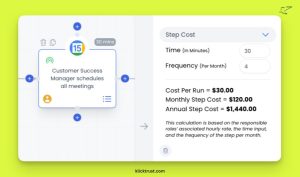
How to Create Process Diagrams With Puzzle (Beginner View)
If you’re wondering how to create process diagrams with Puzzle, start simple. I usually drop a few nodes, connect them with flows, and then add dependencies as questions come up. No pressure to get it perfect on the first try.
The biggest shift is visual logic versus static shapes. Traditional diagrams feel frozen. Puzzle diagrams feel alive. When one step changes, the whole process still makes sense, which is gold for business workflow mapping.
This beginner-friendly approach is why I recommend Puzzle to people who feel overwhelmed by classic workflow diagram software. You think first, draw second.
Visualizing Make Scenarios in Puzzle
This is where Puzzle really earns its place in my stack. When I visualize Make scenarios in Puzzle, I map triggers, routers, and actions as a story, not as code. One glance tells me what’s happening and why.
Debugging becomes faster because problems stand out visually. A broken route feels like a broken bridge, not a hidden error. Compared to whiteboards or sticky notes—or even trying to track automations in RoboMotion RPA– Puzzle keeps Make integration diagrams clean and readable as they grow.
For no-code process automation, this clarity matters more than fancy features. It helps you explain workflows to clients without sounding technical or confusing.
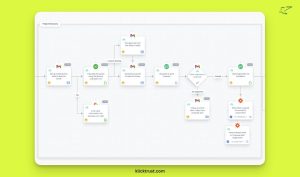
Change Management & Team Alignment
Change is where most workflows fall apart. This is why I treat Puzzle almost like a Puzzle change management diagram in motion. When something updates, I adjust the diagram once, and everyone sees the same truth.
Version clarity is huge here. Teams don’t argue over “which doc is right” anymore. The diagram becomes the source of truth for agency process diagrams.
If you work with teams or clients, this alone builds trust. People feel calm when they can see how things work, even when things change. It’s much like how I’ve seen teams adopt TidyCal vs Calendly for scheduling: the right visual and functional setup reduces confusion immediately.
Puzzle vs Lucidchart vs Miro vs Others (Quick Comparison)
If you’ve ever opened five tabs trying to compare workflow diagram software, you’re not alone. I’ve done that too, usually at midnight, halfway through a project. The truth is, all these tools can draw boxes, but they don’t all help you think the same way about business process visualization.
This quick comparison is based on how these tools behave in real work, not feature pages. I’m focusing on ease, clarity, and how well they support business workflow mapping when things get messy.
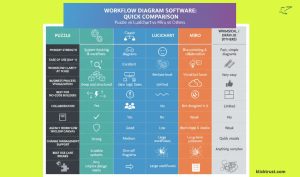
Feature Comparison Table (High-Level)
I won’t drop a big table here yet, but here’s the short version from hands-on use. Puzzle is easy once you get the idea, but it asks you to think in systems. Lucidchart is easy on day one, but harder as workflows grow. Miro is simple for teams, but structure takes work.
For workflow clarity, Puzzle stays readable as processes scale. Automation mapping is where Puzzle clearly leads, especially for Make and no-code flows. Collaboration is strongest in Miro, while the learning curve is lowest in Lucidchart for basic diagrams.
Puzzle vs Lucidchart vs Miro vs Others (Quick Comparison Table)
| Feature / Tool | Puzzle | Lucidchart | Miro | Whimsical / Draw.io (Others) |
| Primary Strength | System thinking & workflows | Classic diagrams | Brainstorming & collaboration | Fast, simple diagrams |
| Ease of Use (Day 1) | Medium (needs mindset shift) | Very easy | Easy | Very easy |
| Workflow Clarity at Scale | Excellent | Weak as diagrams grow | Medium | Weak |
| Business Process Visualization | Deep and structured | Surface-level | Visual but loose | Basic |
| Automation Mapping (Make, no-code) | Strong (clear logic flows) | Limited | Not designed for it | Very limited |
| Best for No-Code Builders | Yes | No | Partial | No |
| Collaboration | Good | Good | Excellent | Limited |
| Agency Workflow Canvas | Excellent | Average | Good | Weak |
| Change Management Support | Strong | Weak | Medium | Weak |
| Learning Curve | Medium | Low | Low | Very low |
| Best Use Case | Scalable systems & SOPs | One-off diagrams | Workshops & ideation | Quick visuals |
| When It Breaks | Very complex design needs | Large workflows | Long-term processes | Anything complex |
If you want fast diagrams, go simple. If you want systems that last, Puzzle earns its place among Puzzle vs Lucidchart, Miro & More comparisons.
Using Puzzle for Relational & Integration Diagrams
This is where Puzzle quietly surprised me. I didn’t expect it to help with deeper logic, but once workflows touched data and automations, it became my go-to thinking space. Not perfect for everything—but powerful in the right moments.
Diagram Relational Database Logic Visually
When I sketch a diagram relational database in Puzzle, I’m not replacing formal ER tools. I’m trying to understand the logic fast. I start with tables, then draw relationships, then trace how data actually moves through the system.
This visual flow helps me spot weak joins or missing links in relational database operations. It feels like following pipes behind a wall instead of staring at a schema diagram. For early planning and clarity, Puzzle works great.
That said, if you need strict database documentation or academic-level modeling, ER tools still win. Puzzle shines before that stage, when ideas are still forming and need room to breathe.
Make Integration Diagrams for Clients
Explaining automations to clients can feel like translating another language. This is where I use Puzzle to create Make integration diagrams that tell a story. Triggers become starting points, actions become steps, and outcomes feel obvious.
Clients don’t care about modules or settings. They care about what happens next. Puzzle lets me explain automations without technical jargon, using simple visuals that make sense in seconds.
For agencies, this builds trust fast. Instead of saying “trust the automation,” you show it. That’s why Puzzle works so well for integration diagrams that need clarity, not complexity.
If your work lives at the intersection of people, tools, and data, this is where Puzzle earns its keep. I’ve also noticed that proper visual mapping in Puzzle complements financial oversight tools, similar to tracking flows in Cash Flow Frog, letting teams see process gaps before they become costly.
Best Process Diagramming Tools for Freelancers & Agencies (2026 Perspective)
By 2026, the best tools aren’t just about drawing boxes. They’re about helping you think clearly while work moves fast. I’ve learned this the hard way—using the wrong tool feels fine at first, then quietly slows everything down. Here’s how I see the best process diagramming tools for freelancers 2026, based on real work, not theory.
If You’re a Solo Freelancer
If you work alone, speed matters more than perfection. I’ve found that Puzzle and Whimsical serve very different moods. Whimsical is great when you need something quick, light, and visual, like sketching ideas on a napkin.
But when your services repeat and grow, Puzzle wins. It helps you see the full system—offers, delivery, follow-ups—in one place. For freelancers building scalable business processes, Puzzle feels less like a diagram tool and more like a quiet assistant that remembers everything for you.
If You Run an Agency
Agencies live in organized chaos. People come and go. Tools change. This is where a Puzzle + Miro hybrid workflow shines. I’ve used Miro for brainstorming and workshops, then Puzzle to lock those ideas into clear agency process diagrams.
Miro helps teams think out loud. Puzzle helps teams think long-term. Together, they create a strong agency workflow canvas where ideas turn into repeatable systems instead of forgotten boards.
If You’re Automation-First
If your business runs on automations, clarity is survival. For automation-first teams, my go-to stack is Puzzle + Make + Airtable. Puzzle becomes the visual brain, Make runs the logic, and Airtable holds the data.
This combo makes no-code process automation easy to explain and easy to fix. When something breaks, you don’t panic—you look at the diagram and follow the flow. That’s the difference between reacting to problems and actually controlling your systems.
If there’s one lesson I’ve learned, it’s this: the right process mapping tools don’t just save time. They reduce stress. And in 2026, that’s a competitive advantage most people underestimate.
Pros and Cons of Puzzle (Honest Take)
Let me be real with you—Puzzle isn’t perfect, but it’s saved me countless hours when mapping complex workflows. Here’s my honest take after using it on real projects, agency SOPs, and no-code automations.
Pros
- Clear system-level thinking: Puzzle forces you to see the forest, not just the trees. Instead of getting lost in isolated boxes, you get the full flow of work. It’s like having a bird’s-eye view of your business processes.
- Strong for SOPs and automation logic: If your workflows involve Make, Zapier, or Airtable, Puzzle keeps everything visual and connected. No more messy spreadsheets or sticky notes—everything makes sense at a glance.
- Scales well as processes grow: I’ve watched small diagrams turn into multi-step systems, and Puzzle handles it without collapsing. The diagrams stay readable even as complexity grows.
Cons
- Not ideal for free-form brainstorming: If you want to sketch ideas loosely like on a whiteboard, Puzzle can feel restrictive. It’s better for structured thinking than doodling.
- Learning curve for first-time users: When you first open it, the canvas can feel intimidating. You need to shift from “drawing boxes” to thinking in flows, but once that clicks, it becomes addictive.
- Limited artistic customization: If you love colors, icons, and fancy styling, Puzzle isn’t a design playground. It prioritizes clarity over flair.
Honestly, I see Puzzle like a smart assistant: it won’t replace your creativity, but it makes sure your processes don’t trip you up. For freelancers, agencies, and no-code builders, that clarity alone is worth the small learning curve.
When You Should NOT Use Puzzle
As much as I love Puzzle, it’s not a silver bullet for every scenario. Knowing when to skip it saves time, frustration, and a lot of late-night “why isn’t this working?” moments.
- One-off diagrams: If you just need a simple, single-use flowchart, Puzzle feels like overkill. Something like Lucidchart or even Google Drawings will get you there faster.
- Academic UML-style modeling: Puzzle is great for seeing processes, but if you’re building strict UML diagrams or formal ER schemas for research or IT documentation, specialized tools are still better. It’s not about capability—it’s about the right fit for the job.
- Heavy design-first presentations: Puzzle prioritizes clarity over aesthetics. If your goal is to wow stakeholders with a visually flashy slide deck, it’s not the tool for that. You’ll get functionality, not fireworks.
The key takeaway? Puzzle shines when you need clarity, structure, and repeatable processes, not when you need something quick, decorative, or highly formalized. Use it where its strengths—scalable workflows, SOPs, and no-code automation mapping—actually solve real problems.
Final Verdict – Is Puzzle Better Than Lucidchart or Miro?
After spending months using Puzzle alongside Lucidchart and Miro, here’s the honest truth: it’s not about which tool is “best” universally—it’s about which tool fits your workflow, team, and goals.
Puzzle is better if…
- You need to see the full system instead of just isolated steps. It’s perfect for freelancers managing repeatable projects or agencies building SOPs.
- You rely on no-code automations with Make, Zapier, or Airtable. Puzzle makes visualizing triggers, actions, and outcomes intuitive.
- You want scalable processes that won’t collapse as your business grows. It handles complexity without losing clarity.
Click here to check the pricing details about PuzzleApp.
Lucidchart/Miro is better if…
- You need quick, simple diagrams or one-off charts. Lucidchart is easy to pick up, and Miro shines in team brainstorming.
- You prioritize free-form collaboration over structured workflow thinking. Miro’s whiteboards are unmatched for ideation sessions.
- Your diagrams are primarily presentational rather than operational. For slides or client-facing visuals, they can look flashier than Puzzle.
In short, if your goal is clarity, efficiency, and repeatable business workflows, Puzzle often wins hands-down. But if speed, brainstorming, or flashy visuals matter more, Lucidchart or Miro may fit your needs better.
Think of it like this: Puzzle is the map that shows every road, detour, and shortcut in your business. Lucidchart and Miro can get you from point A to B quickly—but Puzzle helps you plan the entire journey without getting lost.
FAQs – Process Mapping Software Puzzle vs Alternatives
Q1. Is Puzzle good for workflow mapping?
Absolutely. Puzzle excels at visualizing workflows for freelancers, agencies, and no-code builders. Unlike traditional process mapping tools, it focuses on system-level thinking, letting you see triggers, actions, and dependencies in a single agency workflow canvas. For complex SOPs or business workflow mapping, it’s a tool I rely on daily.
Q2. Can Puzzle replace Lucidchart or Miro?
It depends on your needs. Puzzle outperforms in scalable business processes, no-code process automation, and operational playbook visualization. Lucidchart is better for simple or one-off diagrams, while Miro shines for brainstorming sessions. If you want clarity and structured workflow diagrams that grow with your projects, Puzzle often takes the lead.
Q3. How do I visualize Make scenarios using Puzzle?
Puzzle lets you map Make integration diagrams visually. You can trace triggers → routers → actions like a story, not code. It’s perfect for spotting errors and explaining automations to clients. This makes visual process diagrams in Puzzle both intuitive and actionable, even for complex no-code workflows.
Q4. Is Puzzle suitable for agencies and freelancers?
Yes. For freelancers, Puzzle acts like a personal assistant, helping you map repeatable processes for offers, delivery, and follow-ups. For agencies, it provides a shared agency workflow canvas, keeping teams aligned and reducing version conflicts. In both cases, it supports scalable business processes without adding chaos.
Q5. What is the best no-code workflow mapping software in 2026?
While there are several contenders, Puzzle stands out for 2026 freelancers and agencies. Its focus on structured workflows, change management, and no-code automation integration makes it more than just a diagram tool—it becomes a system for thinking and scaling. Alternatives like Lucidchart and Miro are great for simpler needs, but Puzzle leads when clarity, scalability, and visual process diagrams matter most.